 Colorado Criminal Lawyer Blog
When The Police Have Already Made Up Their Minds: Confirmation Bias


When The Police Have Already Made Up Their Minds: Confirmation Bias
By H. Michael Steinberg, A Colorado Criminal Defense Lawyer – Practicing Colorado Criminal Law from both sides for over 40 years.
 Introduction:
Colorado Investigators May Not Realize They Are Biased.
Query: What Is Confirmation Bias, and Will It Affect My Case?
“The human understanding when it has once adopted an opinion (…) draws all things else to support and agree with it. And though there be a greater number and weight of instances to be found on the other side, yet these it either neglects and despises, or else by some distinction sets aside and rejects; in order that by this great and pernicious predetermination the authority of its former conclusions may remain inviolate.”
(Francis Bacon, 1620)
In the 1960’s. confirmation bias began to gain acceptance as a term that applied to tenaciously holding on to a hypothesis and refusing to consider contradictory evidence.
In Colorado criminal cases, investigators, lawyers, and even jurors may prefer evidence that supports an early, single theory and then ignore contradictory evidence. This has come to be known as confirmation bias.
Confirmation bias can lead attorneys and law enforcement officers to focus on one narrative unless they regularly employ tools such as:
- devil’s-advocate review,
- structured checklists,
- peer review, and
- periodic training on mental biases.
These measures help ensure that all evidence is reviewed properly, which results in more accurate and just outcomes in criminal proceedings.
Confirmation bias can be especially dangerous in criminal investigations, leading to a narrower search for evidence, less consideration of alternative suspects, and an increased risk of wrongful convictions.
Some Common Examples Of Confirmation Bias
- Jumping on one suspect too soon, not following other clues.
- Preferring evidence that supports the idea over evidence that contradicts it.
- Turning ambiguous facts into incriminating facts, not neutral truths.
- At trial, it is when the jury’s perceptions or initial stories solidify before all of the evidence has been examined.
To Further Combat Confirmation Bias, Colorado Criminal Defense Lawyers Should:
- Demand that exculpatory leads be investigated.
- Encourage independent evaluation of all of the available evidence.
- Emphasize conflicting information frequently and early in the investigation.
- When appropriate, use expert testimony to flush out cognitive bias.
- If improper prejudice has influenced decisions or the verdict, preserve those issues and problems for appeal.
 Confirmation Bias and Colorado Criminal Cases
When Colorado police officers begin to investigate a case, they will pass through three basic stages during their initial investigation:
1. The officers’ first exposure to the facts and evidence, which is followed by the selection of a theory of proof – a hypothesis of what happened.
2. An interpretation of the available evidence and the analysis of that evidence to include various possible (not just one) interpretations of that evidence.
3. The utilization of human memory to remember and to process that evidence as either consistent with the officer’s hypothesis or contrary to their hypothesis.
In a criminal investigation, the first stage is essentially a search for information and the processing of that information.
Things can go very wrong at this critical stage. If the investigators frame their hypothesis to conclude that they have the right suspect, a kind of “tunnel vision” may develop which obscures most, if not all, of the other possible hypotheses.
The police, knowingly, or perhaps,… unknowingly become focused on making a case against the person they’ve decided is guilty. When the police either ignore or minimize countervailing evidence or interpret ambiguous evidence in a way that ONLY supports their initial hypothesis, that is confirmation bias.
Confirmation Bias Is Most Often An Unconscious Process
[C]onfirmation bias exists across the entirety of criminal proceedings because human decision-makers are involved in each step. No individual, regardless of profession, is immune to confirmation bias.
It is important for all professionals to understand what confirmation bias is, how it develops, and its potential effects. Strategies such as contextual information management, linear sequential unmasking, independent reviewers, and technology can function to reduce confirmation bias.
Journal of the American Academy of Psychiatry and the Law Online September 2025
A more cogent definition of confirmation bias is that it is a cognitive process in which the human brain uses a system of defenses to filter out potentially “incorrect knowledge or information,” thereby rejecting that new information and seeking to process only the evidence that supports the current hypothesis.
Let’s be clear here: after decades of prosecuting and defending criminal law cases here in Colorado, I believe it is rare for police officers to make up evidence out of whole cloth. It happens, of course, but it is rare.
Police officers are like everyone else; they are good people trying to do their job. But here is the rub: police officers will exaggerate evidence and interpret evidence, or even the lack of evidence, to confirm their mostly unconscious biases.
A “rigidity of thought” is inconsistent with a criminal investigation. The investigator must follow the evidence, even when and if it excludes a person the investigator may feel is the primary suspect.
 Can Colorado Law Enforcement “Control” for Confirmation Bias?
Correcting for confirmation bias requires applying a deliberate process to problem-solving and decision-making. The police need to be trained to avoid assumptions of guilt and to view individuals and case facts with a “blank slate.”
Long before a jury is sworn, before a single witness takes the stand, a criminal case has already begun to take shape inside the minds of the people investigating and prosecuting it. After 43 years, I see it now more than ever:
- A detective forms a hunch about who committed a crime and won’t be dissuaded.
- A forensic analyst learns which suspect the police already favor before looking through a microscope.
- A prosecutor places a number in a plea offer.
- A judge hears a bail request phrased in a particular dollar amount.
Each of these moments feels small, almost imperceptible and merely routine and administrative.
Decades of research in cognitive psychology and criminology show that these early moments often do more to determine the outcome of a criminal case than anything that happens later at trial.
Two well-documented mental shortcuts – confirmation bias and anchoring bias – are largely responsible, and they operate quietly, without any of the actors involved necessarily realizing it or intending any wrongdoing.
Countering Overconfidence: A w-To on Combating Confirmation Bias
The more certain an opinion, the more confirmation bias will tend to exist in an investigation. Opposing viewpoints must be entertained even if the investigator is certain he or she has all the information necessary to make a decision.
Seeking Out Contrary, Non-Confirmatory Evidence
Colorado criminal investigations require an “all sides” approach. Law enforcement must fight the natural inclination to seek only information that supports the initial hypothesis. Relying on memory and examples of cases where the hypothesis proved true doesn’t allow for the possibility that this time the investigator is wrong.
Search for evidence to disprove the theory, rather than only seeking evidence that confirms it.
Vetting Sources
When an investigator is aware of his or her own biases, he or she is better able to overcome those biases. By developing protocols that “vet” each and every source, the investigator embraces the evidence in an impartial and skeptical way.
A balanced and fair representation of the evidence means considering how the motivation and bias of the source can impact the information being processed by the investigator.
Remaining Flexible And Accepting Change
When an investigator locates evidence that contradicts their hypothesis, they should NOT immediately reject that evidence; they need to be open to modifying incorrect aspects of the original theory.
The biased recalling of information selectively prevents the re-framing of the case when that becomes a necessary – albeit unwelcome result.
When a significant piece of evidence is either overlooked or misinterpreted, there is a possible jump to a premature conclusion. Again, confirmation bias induces an investigator to seek answers to only those questions that confirm the hypothesis… committing to a single causal explanation.
 One Powerful Example: Verification Bias in Witness Recognition – The Eyewitness Nightmare
Eyewitness identification protocols are particularly susceptible to confirmation bias, as a lineup or photographic array is usually conducted by an officer who is already aware of the primary suspect. An investigator, even without trying to sway an eyewitness, can convey the “correct” answer, the answer sought by the police, through vocal inflection, nonverbal cues, or by merely focusing on a certain image.
Studies conducted by psychologists like Margaret Bull Kovera have consistently shown that non-blind lineup procedures significantly elevate the likelihood of erroneous identifications, especially when photos are presented simultaneously
instead of sequentially, prompting witnesses to select the face that most resembles the suspect rather than evaluating each image independently against their recollection.
The suggested reform—double-blind, sequential lineup administration, where the officer is unaware of the suspect’s photo and witnesses examine images individually instead of simultaneously—has been embraced, wholly or partially, by an increasing number of jurisdictions.
Colorado tackled the matter explicitly with recent legislation.
Colorado Revised Statutes section 16-1-109 mandates that all law enforcement agencies within the state establish documented policies and deliver training regarding eyewitness identification protocols, with the state’s model policy, created in collaboration with the Peace Officer Standards and Training board, emphasizing blind or blinded administration and sequential presentation as optimal practices.
The Colorado legislature independently passed HB21-1142 to govern the practice of “show ups,” which involves presenting a lone suspect to a witness shortly after an offense, a method that studies indicate poses a greater likelihood of erroneous identification than a conventional lineup due to the absence of comparative options for the witness.
Here is the summary of the bill:
The act requires each law enforcement agency that employs a peace officer who is required to be peace officer standards and training board (P.O.S.T.) certified to adopt written policies and procedures concerning eyewitness identifications, which must be consistent with the provisions of this act.
Beginning January 1, 2022, each law enforcement agency that uses a show-up shall collect, for each show-up, the date, the technique that was used, the gender and race of the suspect, the alleged crime, and the outcome of the show-up. Each law enforcement agency shall create an annual report of the data collected.
The act directs that a peace officer may only utilize a show-up:
- Following the report of a crime, when a peace officer, acting on reasonable suspicion, has detained a subject in the crime within minutes of the commission of the crime and near the location of the crime;
- When, given the circumstances, neither a live lineup nor a photo array is available as a means of identification, and the eyewitness reasonably believes he or she can identify the subject;
- To verify the identity of an intimate relationship in a domestic violence case; or
- To confirm the identity of a familial subject, including a parent, child, or sibling known to the eyewitness.
 Cognitive Bias in Prosecutors, Judges, and Juries
Confirmation bias extends beyond the confines of the police station. A 2020 review featured in the Journal of Police and Criminal Psychology, which analyzed decades of research on cognitive bias in criminal case assessments, revealed that the predominant focus of the studies was on forensic analysis and testimony; however, a significant portion also investigated judges, juries, sentencing decisions, prosecutorial charging choices, and defense attorney evaluations, affirming that no individual within the system is exempt.
Summary And Conclusion
The danger addressed and outlined in this brief article is to warn that it is all too common for criminal investigators to develop biases, assumptions, and/or conclusions about the evidence, which can lead to not only the conviction of the wrongly accused, but a loss of faith in the law enforcement profession, and it can weaken legitimate criminal cases against the real perpetrators.
Investigators must maintain an appropriate skepticism at every stage of the case. Every criminal investigative situation must begin and end with the presumption of innocence and not a presumption of guilt, the latter causing the investigator to ignore potentially exonerating information.
A wrongful conviction affects all of us – all of society.
Because criminal investigators are trained to work backward from the evidence, they must withhold judgment until all of the evidence is known and fairly and justly processed.
It is only when the investigator has gathered the last piece of evidence in a case, and that is an ongoing process (which continues sometimes right through a trial), that they are in a position to process that evidence fairly and not arrive at a premature conclusion.
Colorado Criminal Law – When The Police Have Already Made Up Their Minds: Confirmation Bias
The reader is alerted that Colorado criminal law, like criminal law in every state and at the Federal level, changes constantly. The article appearing above was accurate when it was drafted, but it cannot account for changes occurring after it was uploaded.
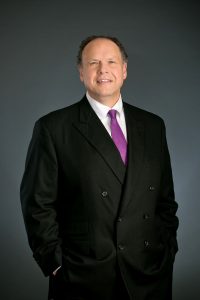 ABOUT THE AUTHOR: H. Michael Steinberg – Email the Author at: hmsteinberg@hotmail.com
A Denver, Colorado Criminal Defense Lawyer – or call his office at 303-627-7777 during business hours – or call his cell if you cannot wait and need his immediate assistance – please call 720-220-2277.
“A good criminal defense lawyer is someone who devotes themselves to their client’s case from beginning to end, always realizing that this case is the most important thing in that client’s life.”
Putting more than 40 years of Colorado criminal defense experience to work for you.
You should be careful to make a responsible choice when selecting a Colorado criminal defense lawyer. We encourage you to “vet” our firm. Over the last 40 years – by focusing ONLY on Colorado criminal law – H. Michael has had the necessary time to commit to the task of constantly updating himself on nearly every area of criminal law, including Colorado criminal law and procedure and trial and courtroom practice.
H. Michael works hard to get his clients the best possible results in and out of the courtroom. He has written, and continues to write, extensively on Colorado criminal law, and he hopes this article helps you in some small way.