 Colorado Criminal Lawyer Blog
Defending Against Strangulation Charges In Colorado Second Degree Assault Cases


Defending Against Strangulation Charges In Colorado Second-Degree Assault Cases
By H. Michael Steinberg, A Colorado Criminal Defense Lawyer – Practicing Colorado Criminal Law from both sides for over 40 years.
What “Strangulation” Means Under Colorado Law (And Why It’s Charged as Second-Degree Assault)
When people hear “strangulation,” they picture the Hollywood version. Big bruises. Handprints on the alleged victim’s neck. Somebody coughing up blood. A dramatic physical collapse.
That kind of evidence is not what prosecutors in reality need to prove a case of Second-Degree Assault – Strangulation Colo. Rev. Stat. § 18-3-203.
In Colorado, the real question of proof is usually much simpler and much more clinical – the law asks this question:
… did someone apply pressure to the neck or block the nose or mouth in a way that impeded the normal breathing or blood flow of the alleged victim?
The question is not “were there marks?” or “was there a broken bone?”
Colorado prosecutors commonly charge strangulation under a section of the State’s Second Degree Assault law. It is most often seen in the context of domestic violence filing and is treated by the criminal courts as a high-risk, high-priority charge. The courts are not playing games here.
The State’s view is basically that even brief pressure to the neck can be dangerous. That framing shows up everywhere. In charging decisions, in bond arguments, in expert testimony, and in how the case is presented to a jury.
Here is the law:
(1) A person commits the crime of assault in the second degree if:
(i) With the intent to cause bodily injury, he or she applies sufficient pressure to impede or restrict the breathing or circulation of the blood of another person by applying such pressure to the neck or by blocking the nose or mouth of the other person and thereby causes bodily injury.
What follows next is the Colorado criminal jury instruction that will help to break the crime into its constituent components. It is the same jury charge that is read to juries in every county in Colorado hearing these cases and is therefore very instructive in understanding this crime.
3-2:16.7 ASSAULT IN THE SECOND DEGREE (RESTRICT
BREATHING)
The elements of the crime of assault in the second degree (restrict
breathing) are:
1. That the defendant,
2. in the State of Colorado, at or about the date and place charged,
3. with the intent,
4. to cause bodily injury,
5. applied sufficient pressure to impede or restrict the breathing or circulation of the blood of another person,
6. by applying such pressure to the neck or by blocking the nose or mouth of the other person, and
7. thereby caused bodily injury.
[8. and that the defendant’s conduct was not legally authorized by the affirmative defense[s] in Instruction[s] ( HMS – such as self defense – see below).
 A Legal/Analytical Examination Of Colorado Second Degree Assault – Strangulation Cases
Penalty Structure Of The Crime Of Second Degree Assault – Strangulation
Second degree assault is ordinarily a class 4 felony ( with a presumptive range 2–6 years in the Department of Corrections – prison).
The strangulation subsection, however, is designated an “extraordinary risk crime,” which extends the maximum from 6 to 8 years, yielding an effective range of roughly 2–8 years DOC plus a mandatory 3-year parole term, fines up to $500,000, mandatory restitution, and firearm/ammunition forfeiture.
A conviction is not eligible for record sealing.
For Colorado second-degree assault by strangulation Colo. Rev. Stat. § 18-3-203, the prosecution must prove beyond a reasonable doubt – the following four separate elements – (see jury instruction and actual law above)… that the accused:
- Intended to cause bodily injury,
- Applied sufficient pressure to the complainant’s neck, or blocked the nose or mouth,
- The pressure actually impeded or restricted breathing or blood circulation, and
- The conduct thereby caused bodily injury.
The statutory threshold is bodily injury, not serious bodily injury.
“Bodily injury” includes “physical pain, illness, or any impairment of physical or mental condition.”
Importantly, the Colorado state legislature specifically created this subsection to permit felony strangulation prosecutions without proving the use of a deadly weapon or causing serious bodily injury.
The new law elevated what were previously misdemeanor assault charges to the felony level.
The change in the law was a direct result of new research into the crime of strangulation. Nearly 40% of domestic abuse instances involve strangling, according to a 2016 study. What is most surprising given these statistics is that between 35% and 50% of non-fatal strangulation cases, there is no obvious evidence of harm.
What The Evidence Typically Looks Like In Second Degree Assault – Strangulation Cases: The Courtroom
The core proof in Colorado strangulation cases is most often primarily based upon the complainant’s account of the mechanism of the alleged assault to include:
- hands, arm, object, or covering over the neck/nose/mouth;
- pressure; and
- an actual breathing or circulation effect—e.g., inability or difficulty breathing, gasping, choking, dizziness, visual changes, weakness, loss of consciousness, throat/neck pain, hoarseness, swallowing difficulty, or similar symptoms.
It is important to understand that the DA must show a distinct, lasting, or visible injury beyond breathing impairment.
Therefore, from the defense perspective – each element is independently contestable, meaning that the defense against this charge requires the careful scrutiny of the medical evidence in the case, if any.
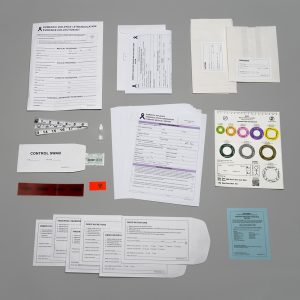
Colorado Strangulation Kit Strangulation Materials
A Closer Look At Medical Evidence Issues – The Forensic Nurse Examiner’s (FNE) Role
Colorado’s FNE programs train nurses to examine strangulation complainants at the request of law enforcement, a hospital, or an advocacy center.
Because strangulation can lack visible injuries, certain protocols instruct examiners to rely heavily on symptom-based documentation – a structured interview covering breathing changes, voice changes, dizziness, loss of consciousness, incontinence, vision changes (“blurry,” “black,” “seeing stars”), hearing changes (“muffled”), neck pain, and difficulty swallowing – supplemented by photographs of any visible marks, and a referral for imaging (CT angiography) in higher-acuity presentations.
This is important for defense preparation because this means the FNE’s file is rarely just a simple injury photograph. It is usually a structured narrative built from:
(1) the complainant’s self-reported symptom history,
(2) the nurse’s visual and physical exam including any tests, and
(3) the nurse’s clinical opinion correlating the two.
Each of those three components is vulnerable in a different way.
FNE testimony does most of the work for the prosecution – the nurse’s documentation is frequently offered as the primary proof that the alleged pressure was “sufficient” and that it also “caused” injury.
One Recent Colorado Case Is Illustrative Of The Level Of Evidence Needed At Trial
In one recent case,People v, Martinez the Colorado Court of Appeals held that testimony that the defendant applied neck pressure and made it hard for the victim to breathe sufficed as bodily injury: breathing is a physical condition, and impairing it is an injury under the statutory definition.
The Court, in Martinez, further stated that an impairment “however slight” can establish bodily injury. Therefore, no visible neck marks, an ER visit, an imaging result, a loss of consciousness, or expert testimony is required to prove the case.
Here are some important excerpts from the appeal:
visible injury is not an element of second degree assault. Instead, the prosecution must prove that the victim suffered “bodily injury.” “Bodily injury” means, as relevant here, “physical pain . . . or any impairment of physical . . . condition.” § 18-1-901(3)(c), C.R.S. 2023.
The girlfriend testified that when Martinez was choking her, she felt pain and dizziness and thought she might black out. Afterward, her neck hurt, her throat was scratchy, and she had difficulty swallowing. She said she had “short-breath problems” that continued up to the time of trial.
Because proof of physical pain, however slight, supports a finding of bodily injury, the girlfriend‘s testimony was sufficient to establish the bodily injury element of second degree assault. (even though photographs showed only “faint marks” indicating a scratch, the officer‘s testimony that defendant‘s act of scratching his arm caused him pain was sufficient to support a finding of bodily injury).
As discussed in detail below, other forms of physical corroboration may be relevant to the People’s case, but questions of law remain as to whether pressure functionally impeded or restricted breathing/circulation and caused the requisite statutory bodily injury.
Common Corroborative Evidence To Prove Intent To Cause Bodily Injury
The prosecution in a Colorado strangulation case may corroborate the alleged victim’s account with other contemporaneous evidence such as:
- 911 audio,
- body-camera footage,
- photographs,
- witness observations (hoarse voice, coughing, panic, redness),
- statements to responding officers or medical personnel, texts, admissions, and
- medical evidence of symptoms or injury.
The required intent to cause bodily injury can be proven circumstantially. For example, a jury is permitted to infer bodily injury from the duration and force of the pressure applied, statements made during the event, repeated compression of the neck after protest or resistance, disparity in size or position of the parties, and the surrounding altercation.
Colorado does not require direct evidence of intent; it can be inferred from the circumstances. The keyword is impedes, and, in this context, it can mean that a person can be strangled and have little to show on the outside.
Let’s look closer at this issue.
The Core Problem: Strangulation Often Leaves Little Or No Visible Injury – What Prosecutors Must Prove: The Three Foundational Elements Of The Charge
What follows are the most fundamental of the key elements of this crime of strangulation and how these elements look in real practice, e.g. the way prosecutors actually build their cases.
Element 1: The Act Happened (Pressure or Blockage That Impaired Breathing or Circulation)
The prosecutor must prove that the defendant:
- applied pressure to the neck, throat, or sides of the neck, or
- blocked the nose and/or mouth, and
- that it impeded normal breathing or blood flow. (Not necessarily caused injury.
The prosecution is always searching to utilize “impairment evidence.” Evidence often in the form of statements such as “I couldn’t breathe,” “I couldn’t talk,” “I thought I was going to pass out,” plus any objective evidence that corroborate those statements.
Element 2: Identity (Linking The Act To The Accused)
This Defendant is the person who committed the physical acts. This is usually proven through:
- admissions or partial admissions by the accused,
- a witness who saw the act,
- digital evidence (messages, calls, location),
- injuries and timing,
- opportunity and the scene context.
Most of the time identity is not really disputed because the parties were alone together. But it still matters, especially when there are competing stories about who put hands on who.
Element 3: No Legal Justification
Self-defense is the most common defense to the crime of second-degree assault. Colorado’s self-defense framework is fact-heavy, and in strangulation allegations the State often argues the response by the accused was not proportional to the threat and therefore not credible.
Sidebar – How Self-Defense (and Mutual Combat Claims) Are Evaluated in Strangulation Allegations
Self-defense in plain English usually comes down to:
- did the person reasonably believe they were in imminent danger?
- did that person use a proportional response to the danger?
- were they the initial aggressor? (in many scenarios this last issue is critical).
Strangulation is hard to justify factually on the basis of self-defense because it’s viewed as a highly dangerous and somewhat unique kind of assault. Even jurors who are more open to the idea of self-defense may struggle with “I had to grab her throat to defend myself.” The nature of strangulation makes it sound escalatory, even if that’s not how the defendant experienced and intended it.
How Prosecutors Rebut A Claim Of Self-Defense
Prosecutors look for:
- any injuries on the complaining witness that suggest domination rather than defense,
- any lack of injuries on the defendant,
- a size and strength disparity (not always determinative, but often argued),
- threats captured in texts, DMs or on body cam,
- who called 911 first?,
- defendant’s statements that shift and change over time,
- prior history (only if admissible).
What helps a self-defense narrative:
- the immediate reporting to the police,
- a consistent account from the start,
- relevant and persuasive medical records for the accused, not just the other party,
- injuries consistent with being attacked,
- independent witnesses,
- a clean timeline that matches other evidence and the scene.
Every case is fact specific. And self-defense claims live and die by the details in discovery and by a thorough and independent defense-based investigation, not by what someone remembers a month later.
“Beyond A Reasonable Doubt” In This Context
In strangulation cases, “beyond a reasonable doubt” often comes down to consistency and corroboration of the statements of the alleged victim.
A clean, consistent timeline supported by 911 audio, body cam, medical notes, and photos is hard to combat at trial. On the other hand, a case that relies on a late report to the police, no timely medical examination, or a single blurry photo is a very different animal.
 A Deeper Dive Into Strategic And Critical Points Of Attack By The Defense
The defense closely attacks the following areas in these cases where possible:
- whether the evidence proves actual functional impairment rather than mere neck contact or a brief restraint,
- whether the claimed medical symptoms are credible and contemporaneously supported by the evidence, and
- whether the circumstances permit an inference of the specific intent to cause bodily injury.
Sidebar – The Issue OF Recantation In Domestic Violence Cases
Recantation happens often in DV cases. Sometimes because of various family or other pressures – sometimes safety concerns – sometimes financial dependence and sometimes reconciliation.
Here is the point. Notwithstanding common beliefs in the lay community, a recanting victim does NOT end the case. Prosecutors may still proceed without cooperation if they have enough outside corroboration from sources such as video, medical notes, and recorded statements.
1. The Alleged Strangulation Victim’s Statements To Law Enforcement
A focused attack on the prosecutor’s case can take many forms. The following areas of “attack” are intended to explore some of them.
Possible Defense Areas Of Attack
Here Colorado criminal defense attorneys typically push hard in such areas as:
- leading or suggestive questions by officers,
- evolving and inconsistent narratives of the alleged victim over time,
- any motive to fabricate (custody disputes, divorce, jealousy, financial leverage),
- possible coaching or outside influences on the alleged victim, and
- why key details were missing early, but then appear mysteriously later.
2. Police Observations: Body Cam, Scene Documentation, and Immediate Physical Symptoms That Are Alleged To Be Strangulation-Related
Officers are trained to look for certain strangulation-related indicators. Common notes include:
- a hoarse or raspy voice,
- any coughing, gagging,
- difficulty swallowing, complaints of throat pain,
- red eyes or watery eyes,
- petechiae (specks of red dots in the eyes if present),
- visible marks, scratches, redness on the skin,
- shaking, fear, panic, dissociation.
However, notably, not all of these physical observations are specific to strangulation. But prosecutors may try to use them as “fits the pattern” evidence. On the other hand the defense can attacks them when they are NOT there (when they are absent from the evidence) or when there are other rational and reasonable sources of this evidence.
Why Body Cam Matters
Body cam is becoming more and more critical to both sides of a criminal case because video captures things that are hard to fake convincingly in real time or evidence that is interpreted by the police in trial.
Body cam often captures such things as:
- voice changes,
- breathing difficulties,
- spontaneous statements from either party,
- the scene exactly as it appears and the emotional tones present,
- the accused’s actual demeanor and his or her statements.
For example, sometimes a jury actually hears the victim’s voice on body cam, and that becomes the case – not the photos – not the report…the voice.
Scene Evidence
Prosecutors also use the environment of the exchange itself to support an assault narrative. Again, the defense searches for what ISN’T there.
- torn clothing,
- broken items,
- a disturbed room,
- signs of struggle,
- things knocked over, dents or holes in the walls, disarray.
The scene may not prove or disprove strangulation by itself, but it can shed light on what really happened.
What Is Missing And Why It Is Missing?
Here the defense focuses on such issues as:
- confirmation bias (officers arriving primed for and expecting domestic violence – DV),
- an incomplete witness canvass (neighbors, roommates, kids),
- the failure to photograph the scene properly, or at all,
- misinterpretation of redness or irritation evidence on the alleged victim,
- gaps in body cam coverage, missing footage, or poor audio quality.
3) Medical Evidence: ER Records, Forensic Exams, and Symptom Timelines
If there’s a medical exam close in time to the alleged crime the prosecutors use it. Even when the medical notes say “no visible injury.” This is because the point is often not the injury; it’s alleged impairment.
Common Physical Symptoms From A Medical Perspective
As noted in the Martinez case (above) – was there evidence of, or the absence of:
- neck tenderness or pain,
- bruising that appears later,
- voice changes (hoarseness),
- odynophagia (pain during swallowing),
- shortness of breath,
- dizziness, nausea,
- headache,
- fainting or near fainting.
Was There Any Form Of Medical Imaging?
Sometimes the ER orders CT, CTA, or other imaging depending on symptoms and protocols. Prosecutors use imaging in two different ways:
- Was there a concerning finding?
- If the imaging was normal, some prosecutors are still willing to argue normal imaging does not rule out an episode of impeded breathing or circulation.
To the State clean imaging may mean no detected internal injury at the time of the imaging.
Experts And The Use Of The Phrase “Consistent With”
Forensic nurses and ER physicians often testify about how strangulation can occur without external marks. They use carefully chosen language such as “the findings are consistent with the history provided.”
Language matters – “consistent with” is not the same as “diagnostic of.” Prosecutors sometimes will try to stretch the opinions to achieve what I call “gap the facts.” Experienced criminal defense attorneys try to pull the truth back into its real meaning.
Possible Defense Areas Of Attack
- alternative causes for symptoms (panic, asthma, illness, allergies),
- incomplete patient history (what was disclosed, what wasn’t),
- overstatement of the term “consistent with,”
- documentation gaps or copy-paste charting issues,
- chain of custody issues: who took the photos, when, and how?
4) Photographs: Neck and Face Photos, Redness, Bruising, and the Limits of Images
Photos are usually used as corroboration and not the whole of the State’s proof.
Prosecutors Try To Use Photos
- to show redness, scratches, bruising,
- to document a timeline (before and after),
- to show bruising that appears 24 to 72 hours later,
- to support the medical notes and the 911 statements.
Why Photos Can Mislead
Photos are often misleading – why?
- lighting changes everything,
- camera quality and angle can exaggerate or hide marks,
- skin tone affects visibility of redness and bruising,
- redness can come from many sources, including crying, friction, allergies, eczema, clothing, even medical tape
Best practice evidence, from the State’s perspective and if it is missing:
- multiple angles,
- close and mid range,
- a scale reference,
- follow up early photos after a day or two,
- preserved originals with hidden metadata,
Possible Other Defense Areas Of Attack
- no baseline photos, so “change” in the evidence is pure speculation,
- no scale or poor technique,
- filters, edits, or compression,
- missing metadata or unclear chain of handling.
5) Defendant Statements: Admissions, Partial Admissions, And Trying To “Explain It Away”
Defendant statements are often where the State finds its cleanest narrative.
Common Patterns Of Defendant’s Statements
The rule is this – NEVER EVER EVER make a statement to the police, at least without the guidance of counsel.
Statements can include:
- outright denials,
- minimization: “I only pushed her away,”
- partial admissions: “I grabbed her neck but not hard,”
- alternative story: “she attacked me first,” self-defense
- accident: “my arm was across her, but I didn’t mean it.”
Even a small admission can be damaging to the defense case. If the state can combine “I grabbed her neck” with body cam hoarseness and a medical note about swallowing pain, the story starts to lock in.
Texts And Social Media
These can also be devastating to the defense:
- apologies that imply wrongdoing,
- threats,
- “don’t call the police,” requests,
- instructions to delete text messages,
- attempts to get the witness to change the story.
Prosecutors will use these kinds of statements as corroboration of the commission of the assault and sometimes as consciousness of guilt.
Possible Defense Areas Of Attack
- Miranda and voluntariness issues,
- coercive tactics, fatigue, intoxication,
- selective video clips that remove context,
- ambiguous wording (especially in texts),
- sarcasm, slang, or apologizing to calm someone down rather than admitting conduct.
6) Third Party Evidence: Neighbors, Children, and Prior Incidents (When Admissible)
Neighbors
Neighbors can be strong witnesses because they’re “outside” the relationship. Prosecutors may use this evidence such as:
- hearing choking sounds,
- hearing pleas for help,
- hearing banging and then sudden silence,
- seeing someone run out, crying, gasping.
Children In The Home
This is sensitive and complicated. Whether and how children’s statements come in depends on procedure and the rules of evidence. Prosecutors may use trained child interview protocols. Defense teams will then scrutinize this area hard for suggestibility and contamination.
Prior Incidents Of Violence
Prior bad acts are not automatically admissible. There are strict limits on their admission, but the tide is changing. When allowed, prosecutors use prior incidents to a devastating purpose and will argue things like:
- prior intent,
- the absence of mistake or accident,
- a clear pattern (within the allowed purpose of law).
Possible Defense Areas Of Attack
- credibility and bias of third party witnesses,
- the suggestibility of children,
- exclusion of inherently unreliable hearsay statements,
- unfair prejudice outweighing any probative value based upon the admission of prior acts.
Other Weak Spots in the State’s Proof Creating Reasonable Doubts In The Minds Of The Jury)
There are patterns that show up again and again in weaker cases.
Inconsistent Narratives
Not every factual inconsistency matters in a given case. But some do. Especially the following:
- mechanism of the injury changes (hands vs forearm vs clothing),
- duration of the alleged crime changes,
- claims of loss of consciousness that appear later.
- location of the alleged assault changes (bedroom vs kitchen vs car),
- details that contradict body cam.
The Absence Of A Timely Medical Exam
Delays in an investigation will weaken causation and documentation of injuries. Prosecutors will then try to fill gaps with 911 calls and/or body cam, but medical notes close in time can sting. The defense will look for areas of inquiry such as:
- pre-existing conditions,
- recent injuries,
- intoxication effects,
- panic attacks,
- allergies or skin conditions,
- consensual activity that could explain marks.
Other Credibility Factors
Defense can raise motive issues without attacking someone’s character through the investigation or flushing out of such areas as::
- custody disputes,
- jealousy and breakups,
- immigration leverage,
- financial pressure,
- housing leverage.
Other Investigative Failures
- no follow up photos,
- missing body cam segments,
- sloppy report writing,
- failure to collect phone data,
- failure to interview key witnesses.
Sometimes the reasonable doubt isn’t “this never happened.” It’s “the investigation didn’t prove strangulation, it proved conflict.”
The 3 Things That Usually Decide These Cases: Corroboration, Credibility, and Documentation
If you want the simplest lens for how these cases are evaluated, it’s this.
1. Corroboration
Independent support for the core claim. 911 audio, body-cam, medical notes, texts, witnesses.
2. Credibility
A timeline that makes sense. A mechanism that stays stable. Demeanor on video. And if there’s recantation, a plausible explanation for why (fear, pressure, finances) instead of a total story collapse.
3. Documentation
Quality photos, follow up, complete medical notes, thorough reports. Documentation is what turns “I think” into “I can prove.”
A quick strength spectrum, in real world terms:
- Strong: multiple sources tell the same story, close in time.
- Medium: some corroboration, but there are gaps.
- Weak: relies on one late report, minimal documentation, lots of ambiguity.
Sidebar – If You’re Accused: What Not to Do (Because What You Do Often Becomes the Prosecution’s Best Evidence)
This is where people accidentally build the case against themselves.
- Do not contact the complaining witness if there is a no contact order or protection order. Not to apologize. Not to explain. Not to ask them to “fix it.” Violations can become new charges and prosecutors will argue it shows consciousness of guilt.
- Do not delete anything. Texts, photos, app data, call logs. Trying to clean up your phone often backfires in a big way, legally and practically.
- Do not talk casually on recorded lines. Jail calls, social media messages, DMs, even “private” chats with friends. Prosecutors subpoena things. People forward things. And small statements like “I barely touched her neck” can become the centerpiece at trial.
- Do preserve your own evidence legally. Save communications. Identify witnesses. Document your injuries. Keep receipts and location data. Then give it ALL to your attorney, not the internet.
- Talk to a Colorado Criminal Defense Lawyer immediately and
- Follow your bond conditions exactly.
This isn’t legal advice. It’s just the reality of how evidence tends to get created in these cases.
These Cases Are Won (or Lost) on Details, Not Labels
Colorado prosecutors usually prove strangulation by layering evidence that points to impairment, then backing it up with corroboration and documentation. Not necessarily bruises. Not necessarily a dramatic injury photo.
And the stakes are real. Felony exposure. Protection orders. Firearm consequences. Employment issues. Immigration consequences in some situations. This is not the kind of allegation to treat casually, even if you think it will “blow over.”
At the same time, the burden is still on the state. Always. They have to prove the elements beyond a reasonable doubt.
If you’re facing this charge, or supporting someone who is, the most productive next step is simple: consult a qualified Colorado criminal defense attorney.
The outcome usually lives in the small details people overlook on day one.
 Summary And Conclusion – The Heart Of The State’s How Prosecutors Prove “Impeded Breathing or Circulation” Without Obvious Injury
Prosecutors try to separate “injury” from “impairment.” Injury is bruising, scratches, internal damage. Impairment is the moment when breathing or blood flow is restricted, even briefly.
Defense and prosecution experts can often explain that variability. Why one person bruises and another doesn’t. Why pressure angles matter. Why duration estimates are unreliable. Why “no marks” does not equal “no strangulation.”
- many symptoms are subjective,
- panic and anxiety can mimic respiratory symptoms,
- lack of objective findings,
- experts leaning too hard on “consistent with,”
- symptoms reported later with no contemporaneous documentation.
What follows are summary answers to frequently asked questions in this complex area of Colorado criminal law.
 FAQs (Frequently Asked Questions)
What does “strangulation” legally mean under Colorado law?
Under Colorado law, strangulation involves applying pressure to the neck or throat or blocking the nose or mouth in a way that impedes normal breathing or blood circulation. It does not require visible marks or injuries; the key factor is whether breathing or blood flow was impeded.
Why is strangulation charged as Second-Degree Assault in Colorado?
Strangulation is commonly charged as Second-Degree Assault in Colorado because even brief pressure on the neck can be medically serious and dangerous. The state treats it as a high-risk allegation, especially in domestic violence cases, emphasizing the potential harm caused by impeding breathing or circulation.
What must prosecutors prove to secure a conviction for strangulation in Colorado?
Prosecutors must prove four main elements: 1) that an act of strangulation or suffocation occurred (pressure or blockage that impaired breathing or circulation), 2) that the required mental state was present, 3) identity linking the defendant to the act, and 4) that there was no lawful justification such as self-defense.
How do prosecutors handle cases where strangulation leaves little or no visible injury?
Because strangulation often leaves minimal physical evidence like bruises or scratches, prosecutors build a mosaic of evidence including witness statements, 911 calls, body cam footage, medical records, photos, defendant statements, and digital evidence. They seek consistent and corroborated facts showing impaired breathing or circulation beyond reasonable doubt.
What types of evidence are most important in strangulation cases in Colorado?
Key evidence includes the complaining witness’s statements (especially 911 calls made close to the incident), on-scene police observations, medical and forensic nursing records, photographs, digital communications like texts and calls, body cam footage, and sometimes testimony from other witnesses or prior incidents if admissible.
Can self-defense be used as a legal justification against strangulation charges in Colorado?
Yes, self-defense is a common legal justification raised in strangulation cases. However, Colorado’s self-defense framework requires fact-specific analysis. Prosecutors often argue that the response was not proportional or credible. Whether self-defense applies depends on detailed facts surrounding the incident.
Colorado Criminal Law – Defending Against Strangulation Charges In Colorado Second-Degree Assault Cases
The reader is alerted that Colorado criminal law, like criminal law in every state and at the Federal level, changes constantly. The article appearing above was accurate when it was drafted, but it cannot account for changes occurring after it was uploaded.
 ABOUT THE AUTHOR: H. Michael Steinberg – Email the Author at: hmsteinberg@hotmail.com
A Denver, Colorado Criminal Defense Lawyer – or call his office at 303-627-7777 during business hours – or call his cell if you cannot wait and need his immediate assistance – please call 720-220-2277.
“A good criminal defense lawyer is someone who devotes themselves to their client’s case from beginning to end, always realizing that this case is the most important thing in that client’s life.”
Putting more than 40 years of Colorado criminal defense experience to work for you.
You should be careful to make a responsible choice when selecting a Colorado criminal defense lawyer. We encourage you to “vet” our firm. Over the last 40 years – by focusing ONLY on Colorado criminal law – H. Michael has had the necessary time to commit to the task of constantly updating himself on nearly every area of criminal law, including Colorado criminal law and procedure and trial and courtroom practice.
H. Michael works hard to get his clients the best possible results in and out of the courtroom. He has written, and continues to write, extensively on Colorado criminal law, and he hopes this article helps you in some small way.