 Colorado Criminal Lawyer Blog
Probable Cause Under Colorado Law (2026)


By H. Michael Steinberg, A Colorado Criminal Defense Lawyer – Practicing Colorado Criminal Law in the courts of Colorado for over 40 years.
Probable Cause Under Colorado Law
Introduction– A Practical Guide to the Constitutional Threshold
Probable cause is a central constitutional limit on governmental power in Colorado criminal cases.
It is the practical, fact-based threshold that generally permits police to make an arrest, seek a warrant, or search where a recognized warrant exception applies—but it is not proof beyond a reasonable doubt and does not itself establish guilt.
A Constitutional Foundation
Probable cause arises under both the Fourth Amendment to the U.S. Constitution and Article II, section 7 of the Colorado Constitution.
Colorado’s constitutional text protects persons, papers, homes, and effects against unreasonable searches and seizures and provides that a warrant may not issue without probable cause, an oath or affirmation reduced to writing, and particular description of the place, person, or things involved.
The exact language of Article II, § 7 states:
“The people shall be secure in their persons, papers, homes and effects, from unreasonable searches and seizures; and no warrant to search any place or seize any person or things shall issue without describing the place to be searched, or the person or thing to be seized, as near as may be, nor without probable cause, supported by oath or affirmation reduced to writing.
The language of Article II, Section 7, serves two related purposes.
First, it requires an adequate factual basis before the government intrudes on protected privacy or liberty interests.
Second, it requires specificity: a warrant cannot authorize a general search merely because officers suspect wrongdoing.
Colorado courts apply these protections in light of the facts known at the relevant moment. The inquiry is objective; the issue is whether the facts and reasonably trustworthy information available would cause a reasonably cautious person to hold the required belief.
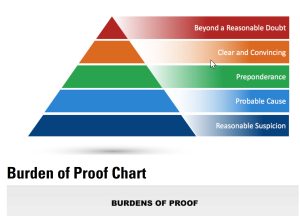 What probable cause means:
There is no mathematical formula for probable cause.
It is a practical, common-sense standard that asks whether circumstances justify a reasonable belief that criminal activity has occurred or that evidence of it will be found in a particular place.
The required showing changes slightly with the legal setting of when probable cause is applied:
| Setting | Core questions |
| Arrest | Is there probable cause to believe a crime has been or is being committed, and that the identified person committed or is committing it? |
| Search warrant | Is there a fair probability that contraband or evidence of criminal activity will be found at the specified place? |
| Arrest warrant | Does a sworn complaint or supporting statement establish probable cause that an offense occurred and the named person committed it? |
| Preliminary hearing | Is there probable cause to believe the accused committed the charged offense, sufficient to bind the matter over when applicable? |
Probable cause is therefore substantially less demanding than the trial standard of proof beyond a reasonable doubt.
Also, the timeline is straight: even a later acquittal at trial does not automatically establish that an arrest or search lacked probable cause when it occurred; the legality of the police action ordinarily turns on the information then available, not on the case’s eventual outcome.
Understanding The “Totality of the Circumstances” Test
Colorado courts determine probable cause under the “totality of the circumstances.” Rather than isolating individual facts and dismissing each as innocent in itself, a judge assesses how all reasonably reliable facts work together.
This approach recognizes that otherwise lawful behavior can acquire significance in context. For example, a person’s presence near a location, standing alone, may mean little. But that fact may carry more weight when combined with a reliable witness account, surveillance observations, recent reports of a specific crime, matching identifiers, corroborating physical evidence, or admissions.
On the other hand, it is important to understand that the “totality of the circumstances” standard does not permit conclusory allegations. An officer’s unsupported assertion that a person is “suspicious,” or that a location is associated with crime, does not by itself establish probable cause.
The affidavit, testimony, report, or other evidentiary basis must supply facts from which the neutral magistrate or reviewing court can make the necessary judgment.
First: Probable Cause To Arrest
Colorado’s arrest statute authorizes a peace officer to arrest a person when the officer has probable cause to believe that an offense was committed and that the person to be arrested committed it. The statute separately authorizes arrests pursuant to a warrant and arrests for a crime committed in the officer’s presence.
Two components to Make A Legal Arrest
The Colorado Supreme Court has described the arrest inquiry as having two components:
- Probable cause that a crime has been or is being committed.
- Probable cause that the particular person arrested committed or is committing that crime.
Both components matter. An officer may have solid grounds to believe a burglary occurred but lack sufficient facts tying a specific individual to it. Conversely, suspicion that a person behaved unusually is not enough unless facts support a reasonable belief that a crime occurred and that the person was involved.
But, absent a warrant, officers must still be able to articulate facts establishing probable cause at the time of arrest. Section 16-3-102 does not substitute intuition or hindsight for that factual foundation.
Second: Probable Cause To Search
“Search” probable cause focuses on a different connection: the relationship between evidence and a particular place.
PC TO SEARCH
For a warrant to search a residence, vehicle, phone, business, or other location, the affidavit must provide facts sufficient to cause a reasonably cautious person to believe that contraband or evidence of criminal activity is located there.
The distinction is important. Probable cause to arrest a suspect does not invariably create probable cause to search that person’s home.
A search warrant affidavit should provide a factual nexus between the criminal activity or evidence sought and the proposed place of search.
Colorado applies a common-sense analysis rather than a hyper-technical one. A judge considers the circumstances set out in the affidavit and decides whether there is a fair probability that evidence will be found at the identified location.
The Four-Corners Rule
For a search warrant, Colorado requires the supporting probable cause to appear within the “four corners” of the written affidavit. A reviewing court generally evaluates the warrant based on the facts presented to the issuing magistrate, rather than information officers possessed but did not include.
That requirement is especially consequential in arrest and search warrant litigation.
If an affidavit omits critical corroboration, dates, source details, or facts connecting evidence to the place to be searched, the omission may undermine the warrant even if officers possessed additional information outside the affidavit.
Probable Cause Versus Reasonable Suspicion
Probable cause is often confused with reasonable suspicion, the lower standard that can justify a brief investigative stop under appropriate circumstances. Colorado law authorizes a peace officer to stop a person when the officer reasonably suspects that the person is committing, has committed, or is about to commit a crime.
Reasonable suspicion must rest on specific, articulable facts and rational inferences; it cannot be merely an inarticulate hunch. But it is less demanding than probable cause.
| Standard | What it requires | Typical consequence |
| Mere hunch | Unparticularized intuition or speculation | Does not justify an investigative detention or arrest. |
| Reasonable suspicion | Specific and articulable facts supporting a reasonable suspicion of criminal activity | May justify a limited investigatory stop in circumstances authorized by law. |
| Probable cause | Facts and reasonably trustworthy information supporting a reasonable belief or fair probability of crime, involvement, or evidence in a place | May support arrest, a search warrant, or certain warrant exceptions. |
| Beyond a reasonable doubt | Proof sufficient for criminal conviction | Required at trial for guilt. |
A traffic stop illustrates the difference between probable cause and reasonable suspicion. An officer may stop a car based on reasonable suspicion of a traffic violation or a crime, but a further arrest or search generally requires additional justification—such as consent, probable cause, a warrant, or a recognized exception to the warrant requirement.
Warrants and Neutral Review
A core function of the warrant process is to place a neutral and detached judicial officer between police and the person whose privacy or liberty is at stake. The officer seeking a warrant must present sworn facts, and the judge or magistrate determines whether those facts establish probable cause.
For search warrants, the constitutional requirements include:
- Probable cause supported by oath or affirmation.
- A written factual basis in the supporting affidavit.
- A particular description of the place to be searched.
- A particular description of the person or items to be seized
For arrest warrants arising from a felony complaint, Colorado procedure requires a sworn statement of facts establishing probable cause that a criminal offense was committed and that the named person committed it.
The warrant requirement is not simply paperwork. It helps ensure that the decision to authorize a serious governmental intrusion rests on facts reviewed by a neutral judicial officer rather than solely on the investigating officer’s judgment.
Warrantless Searches and Exceptions
The general rule is that a search ordinarily requires a warrant supported by probable cause, but constitutional law recognizes exceptions. Depending on the circumstances, consent, exigent circumstances, a search incident to a lawful arrest, certain automobile searches, plain view, and other defined doctrines may affect whether a warrant is required.
An exception does not eliminate the probable-cause analysis in every case. For example, the emergency or exigent-circumstances inquiry is evaluated from the perspective of a prudent and trained police officer confronting the circumstances at the time of the decision.
The precise scope of an exception matters. A lawful stop does not automatically permit a full evidentiary search; an arrest does not automatically authorize an unrestricted search of a home; and probable cause to suspect a crime does not relieve officers of the need to comply with warrant and particularity requirements when no valid exception applies.
Third – Probable Cause at Preliminary Hearings
Probable cause also plays a procedural role after charging. A preliminary hearing is designed to determine whether there is probable cause to support the prosecution’s charge that the accused committed the particular crime.
At that stage, the prosecution is not required to prove the case beyond a reasonable doubt.
The inquiry asks whether the evidence is sufficient to induce a person of ordinary prudence and caution to conscientiously entertain a reasonable belief that the defendant may have committed the charged offense.
If the court finds probable cause at a preliminary hearing, the case is bound over to district court for arraignment under the applicable procedure. That ruling is not a finding of guilt; it determines whether the prosecution has met the threshold necessary for the case to proceed.
When The Defense Challenges Probable Cause
A defendant may challenge a search or seizure by filing a motion to suppress evidence. The legal theory may be that the warrant affidavit failed to establish probable cause, that officers lacked probable cause for a warrantless arrest or search, that the scope of the search exceeded its justification, or that a claimed exception does not apply.
Common issues include:
- Whether officers had sufficiently reliable and current information.
- Whether the affidavit established a nexus between the suspected offense and the place searched.
- Whether an informant’s information was adequately detailed or corroborated.
- Whether the officer had facts particularized to the person arrested.
- Whether the warrant described the search location and items to be seized with adequate specificity.
- Whether a warrantless intrusion was actually justified by a recognized exception.
The remedy depends on the facts, the constitutional violation asserted, and the applicable procedural rules. In practical terms, probable-cause litigation is frequently fact-intensive: the words used in the affidavit, the timing of observations, the degree of corroboration, and the sequence of police conduct can all be outcome-determinative.
Practical Takeaways
Probable cause under Colorado law is a flexible but meaningful constitutional threshold. It asks whether objective facts—not conclusory suspicion—would lead a reasonably cautious person to believe that a crime occurred, that a particular person committed it, or that evidence will be found in a particular place.
For searches, Colorado’s written-affidavit and four-corners requirements give special importance to the factual detail actually presented to the issuing magistrate. For arrests, the analysis requires individualized grounds connecting both a crime and the person arrested. For preliminary hearings, probable cause ensures that felony charges proceed only when the prosecution has met a threshold showing of factual support.
How Is the Totality of the Circumstances Applied in Colorado Warrants
Colorado courts apply the totality of the circumstances test by making a practical, common-sense assessment of all facts set out in the sworn warrant materials, considered together.
The question is whether those facts give the issuing judge a substantial basis to find a fair probability that contraband, fruits or instrumentalities of crime, or other evidence will be found at the particular place to be searched.
The Governing Inquiry
The analysis is not a checklist in which one missing fact automatically defeats probable cause, nor is it a license to rely on broad suspicion. The magistrate weighs the combined force of the facts—such as observed conduct, timing, source information, corroboration, links to the location, and reasonable inferences from ordinary human behavior.
Colorado’s statute requires the warrant affidavit to identify the location and property involved, establish the legal grounds for the warrant, and establish probable cause that the identified property is located at the identified place.
Factors Commonly Considered
In applying the test, a Colorado judge may consider:
- Source reliability: Whether an informant is known, has provided reliable information before, made statements against interest, or otherwise appears credible.
- Basis of knowledge: Whether the source personally observed the alleged activity, rather than repeating unsupported rumor or speculation.
- Police corroboration: Whether officers independently verified meaningful details, particularly conduct or predictions connected to criminal activity.
- Nexus to the location: Whether facts connect the suspected crime or evidence to the home, vehicle, account, business, or other place to be searched.
- Timing or staleness: Whether the information is sufficiently current in light of the alleged offense, the kind of evidence sought, and whether the conduct appears ongoing.
- Specificity: Whether the affidavit provides concrete facts rather than boilerplate conclusions that evidence is “probably” somewhere.
What Is the Four Corners Rule for Search Warrant Affidavits in Colorado
Under Colorado’s four corners rule, the issuing judge must determine whether probable cause exists from the information contained within the written, sworn search-warrant affidavit itself—its “four corners.” The State generally cannot cure an affidavit that lacks essential facts by pointing later to unrecorded oral explanations or other information the police possessed but did not present in the warrant application.
What The Affidavit Must Show
Colorado’s search-warrant statute requires a sworn or affirmed affidavit that supplies facts sufficient to:
- Identify the person, premises, place, or thing to be searched.
- Identify the property to be sought, seized, or inspected.
- Establish the legal grounds for the warrant.
- Establish probable cause that the specified property is located at the specified place.
Thus, the affidavit must provide a factual nexus between the alleged criminal activity or evidence and the place proposed for search. Conclusions such as “the officer believes evidence is there,” without supporting facts, are ordinarily inadequate.
Practical Effect
The rule means that a suppression court evaluates the probable cause based on what was actually submitted to the magistrate—not on hindsight or on investigative facts that remained outside the written application. Colorado authority states that verbal communications cannot repair an affidavit that is fundamentally deficient in stating the underlying facts and circumstances, and the police’s possession of unsubmitted information is immaterial to that inquiry.
For example, assume investigators have strong evidence that a suspect sells narcotics, but the affidavit does not explain why drugs, records, cash, or other evidence are likely to be at the suspect’s residence. The fact that officers may have had additional surveillance notes or informant details outside the affidavit will not ordinarily supply the missing nexus for probable-cause review.
Incorporated Materials
Materials attached to the affidavit and expressly incorporated by reference can be considered part of its four corners. Colorado authority recognizes that such incorporated documents need not be separately sworn merely because they are attached and incorporated into the affidavit.
Colorado procedure also permits sworn testimony to be reduced to writing and signed under oath before the warrant is issued; the affidavit and transcript supporting the warrant request are to be attached to the warrant filed with the court.
Why It Matters
The four corners rule enforces the constitutional requirement that a neutral magistrate—not the investigating officer—make the probable cause determination based on a documented, sworn factual showing. It also creates a reviewable record of precisely what supported the warrant at the time it was issued.
Interaction With Four-Corners Rule
The totality analysis occurs within the four corners of the affidavit and any properly incorporated materials. In other words, the court may draw reasonable inferences from all facts actually placed before the magistrate, but it generally may not supplement a deficient written showing with facts officers knew but failed to include in the warrant application.
That combination is important: Colorado rejects both a hypertechnical reading that dissects every statement in isolation and an after-the-fact approach that lets the government rely on information never submitted to the judge.
Questions That May Help Cut Through the Noise
You can basically run this checklist to help understand probable cause – ask:
- What specific facts did the officer have at the moment of arrest or search?
- Are those facts based on direct observation, reliable witness reports, or just assumptions?
- Is there a clear link between the person and the crime, not just proximity?
- If it is a warrant, is there a clear nexus to the place searched?
- Is the information timely, or could it be stale?
- Is the story internally consistent, or does it rely on vague language?
- What facts were left out that might change how “reasonable” it looks?
If you cannot answer these, you probably do not actually know whether probable cause was present. You just know how it felt.s.
What Actually Meets the Bar
Colorado probable cause is not supposed to be a gut feeling. It is supposed to be a fact-based, common-sense probability judgment.
It is also not a high bar. Which is why it is so easy to misunderstand.
What meets the bar tends to look like this: specific, articulable facts. A coherent narrative. A reasonable link between the suspect and the crime, or between the place and the evidence. Sources that are identifiable or corroborated. A timeline that makes sense.
What does not meet the bar is usually some version of: vague suspicion, mere presence, untested tips, stale information, or affidavits padded with training-and-experience filler but thin on actual case details.
 FAQs (Frequently Asked Questions)
What is probable cause in Colorado criminal procedure?
In Colorado, probable cause means having enough facts and circumstances to make a reasonable person believe that a crime was committed and that the person being arrested did it. For search warrants, it means enough facts to believe evidence of a crime will probably be found in the place to be searched. It is a real threshold based on facts and context, not just a hunch or guess.
How does probable cause differ from reasonable suspicion and beyond a reasonable doubt?
Probable cause is a higher standard than reasonable suspicion but lower than preponderance of the evidence and way below beyond a reasonable doubt. Reasonable suspicion justifies brief stops or detentions, such as traffic or Terry stops, while probable cause is required for arrests and search warrants. Beyond a reasonable doubt is the highest standard used at trial to prove guilt.
Where does probable cause typically apply in Colorado cases?
Probable cause commonly appears in arrests (with or without warrants), search warrants for various places and devices, seizures of property, filing decisions and early court reviews about charges, and preliminary hearings in felony cases where judges decide if there’s probable cause to believe the defendant committed the charged offense(s).
What are the core ingredients that Colorado judges look for to establish probable cause?
Judges look for: 1) Specific facts rather than vague labels—clear observations like “the suspect tried door handles at 2:13 a.m.” instead of “acted suspiciously.” 2) A clear link between facts and the crime—connecting dots so facts aren’t unrelated. 3) Timeliness—the information must be recent enough to support probable cause, as stale info can weaken it. 4) Source reliability—considering who provides information and how credible they are.
Why does time matter when establishing probable cause for search warrants in Colorado?
Time matters because probable cause must be tied to a time frame that makes sense for the type of evidence sought. For example, searching for a stolen TV requires fresher info than investigating long-term drug operations or digital evidence. If info is too old or ‘stale,’ courts may question whether evidence will still be found, which can undermine probable cause.
How do courts evaluate the reliability of sources providing information for probable cause?
Courts assess source reliability by considering who provides the info and why it should be trusted. Named victims with coherent stories often carry strong weight; anonymous tips require meaningful corroboration; confidential informants with criminal histories who receive benefits need their info corroborated carefully. Officers’ observations, surveillance data, records, and controlled buys also contribute, but are weighed for credibility.
Colorado Criminal Law – Probable Cause Under Colorado Law (2026)
The reader is alerted that Colorado criminal law, like criminal law in every state and at the Federal level, changes constantly. The article above was accurate when it was drafted, but it cannot account for changes that occurred after it was uploaded.
 ABOUT THE AUTHOR: H. Michael Steinberg – Email the Author at: hmsteinberg@hotmail.com
A Denver, Colorado Criminal Defense Lawyer – or call his office at 303-627-7777 during business hours – or call his cell if you cannot wait and need his immediate assistance – please call 720-220-2277.
“A good criminal defense lawyer is someone who devotes themselves to their client’s case from beginning to end, always realizing that this case is the most important thing in that client’s life.”
Putting more than 40 years of Colorado criminal defense experience to work for you.
You should be careful to make a responsible choice when selecting a Colorado criminal defense lawyer. We encourage you to “vet” our firm. Over the last 40 years – by focusing ONLY on Colorado criminal law – H. Michael has had the time to commit to constantly updating himself in nearly every area of criminal law, including Colorado criminal law, procedure, and trial and courtroom practice.
H. Michael works hard to deliver the best possible results for his clients, both in and out of the courtroom. He has written extensively on Colorado criminal law and continues to do so, and he hopes this article helps you in some small way.