 Colorado Criminal Lawyer Blog
Defending Against The “Blacked Out” Sexual Assault Victim Under Colorado Law


By H. Michael Steinberg, A Colorado Criminal Defense Lawyer – Practicing Colorado Criminal Law in the courts of Colorado for over 40 years.
 Introduction:
Defending Against the “Blacked Out” Accuser:
How Colorado Law Treats Alcohol-Induced Incapacity in Sexual Assault Cases
This article is an update on this topic, building on an article I wrote many years ago, and is intended to expand on significant progress in defending these difficult cases.
A Denver jury in the case of People vs Martinez heard two experts describe the exact same night in two very different ways. A prosecution toxicologist testified in that case that the accuser’s blood alcohol level had likely peaked between 0.3 and 0.4 percent — high enough, in the expert’s opinion, to cause a “blackout,“ a state in which a person is conscious but simply isn’t forming memories.
A defense expert – a forensic psychologist testified that blackouts happen, of course, but added a critical caveat: people in a blackout can carry on complex conversations, make decisions, and even initiate activities they will never remember – and afterward, they often fill the resulting gaps in their recall with “false memories” that align with what they assumed must have happened.
Here is what the Appeals Court described about the battle of the “experts:”
“An expert in “forensic psychology related to alcohol, blackouts, and memory impairment (the psychology expert) also testified for Martinez.
The psychology expert opined that people can engage in complex activities during blackouts and that blackouts can, but do not always, cause substantial impairments due to the alcohol.
The expert further explained that people who experience blackouts often try to fill in the gaps in their memory by creating false memories that align with their assumptions and expectations of themselves.”(People v. Martinez, Colo. App. No. 17CA1583 (Oct. 8, 2020)).
That case is a useful window into one of the hardest categories of sexual assault allegations to defend — and, done right, clearly defensible: the claim that the accuser was so intoxicated she “blacked out” and cannot remember consenting, or cannot remember the encounter at all.
Colorado law treats this scenario very differently than most people assume, and the science of alcohol-induced memory loss creates real, evidence-based room for a logical, reasoned, and persuasive defense at trial.
Here is how these cases actually work.
Two Separate Statutes Cover Two Very Different Situations
Colorado’s sexual assault statute, C.R.S. § 18-3-402, does not treat “she was drunk” as a single legal theory. Prosecutors charging an intoxication-related sexual assault case are almost always relying on one of two very different subsections, and which one applies in a given case changes the felony class, the sentence, and the entire trial strategy:
Incapable of appraising the nature of her conduct — § 18-3-402(1)(b). This is the most common charge in blackout cases. It criminalizes sexual intrusion or penetration where “the actor knows that the victim is incapable of appraising the nature of the victim’s conduct.” Standing alone, this is a class 4 felony.
Physically helpless — § 18-3-402(1)(h). This applies where the victim is “physically helpless” — statutorily defined as “unconscious, asleep, or otherwise unable to indicate willingness to act” — and the actor knows it. If proven, this bumps the offense up to a class 3 felony under § 18-3-402(3.5) (C.R.S. § 18-3-401).
Substantially impaired by a drug or intoxicant administered without consent — § 18-3-402(4)(d). This covers a different fact pattern entirely: the actor secretly drugging or over-serving the victim “for the purpose of causing submission.” It is also a class 3 felony and requires proof that the defendant caused the impairment, not just took advantage of it.
The Colorado Supreme Court has confirmed that subsection (b) and subsection (h) are not interchangeable — subsection (b) addresses a victim who is “cognitively unable to appreciate her conduct,” while subsection (h) addresses someone who is unconscious or otherwise physically unable to act, and a sleeping or blacked-out victim can fall under either depending on the specific evidence in the case being tried. (Platt v. People, 214 P.3d 1005 (Colo. 2009)).
That distinction matters enormously to the defense: a genuinely unconscious victim and a victim who was awake, talking, walking, and later says she doesn’t remember it are not the same case, and the state has to prove which section they are proceeding under.
Why “Knowingly”: The Mental State Required For These Crimes Is Critical To The Analysis
Every version of this offense (Colorado’s sexual assault statute, C.R.S. § 18-3-402, requires the prosecution to prove a culpable mental state — and courts have held that even where the statute’s text doesn’t spell it out, the applicable mental state for subsection (1)(b) is “knowingly” (COLJI-Crim. 3-4:02; C.R.S. § 18-1-503).
The elemental instruction given to Colorado juries at trial in these cases requires the State to prove that the defendant:
-
Knowingly inflicted sexual penetration or intrusion on the accuser, and
-
Did so with knowledge that the accuser was incapable of appraising the nature of her conduct at that moment.
That second element is not:
“Was the accuser actually intoxicated?”
it is,
“Did this defendant know, at the time, that the alleged victim was too impaired to understand what was happening?“
Those are very different questions, and the gap between them is where the defense can build their case.
Colorado courts have held that once the prosecution proves incapacity under subsection (b), that finding necessarily negates consent as a matter of law, so a defendant is not entitled to a separate jury instruction on the affirmative defense of consent (Platt v. People, 214 P.3d 1005 (Colo. 2009), affirming People v. Platt, 170 P.3d 802 (Colo. App. 2007)).
In practice, that means a defense built on “she consented” is legally weaker than a defense built directly on the elements themselves: either she wasn’t actually incapable, or the defendant didn’t know it and had no reason to.
Key Takeaways
The prosecution doesn’t just have to prove the accuser was intoxicated — it has to prove the defendant actually knew, at the time, that she was incapable of understanding what was happening. That knowledge requirement is the central battleground of the defense in nearly every “blackout” case.
A “Blackout” Is Not the Same Thing as “Unconscious”
A scientific analysis of the facts – bolstered by expert testimony – can drive this defense. This is worth understanding precisely because prosecutors and juries frequently conflate these concepts of alleged incapacitation.
Alcohol researchers distinguish between two categories of blackout. An en bloc blackout is complete, permanent memory loss for a stretch of time — the person retains no memory of it under any circumstance.
A fragmentary blackout is far more common and involves patchy, partial memory loss, with recall sometimes triggered by cues or reminders.
Critically, studies show fragmentary blackouts occur more than three times as often as en bloc blackouts, and — perhaps counterintuitively — both types have been documented across a similar range of blood alcohol concentrations, meaning BAC (blood alcohol concentration) alone doesn’t reliably predict which kind of memory failure someone experienced or how outwardly impaired they appeared.
Although overall reporting of blackouts by the sample mirrored rates reported in prior research, prevalence and incidence of fragmentary blackouts were more than threefold those of en bloc blackouts.
A surprising finding was that the two blackout types exhibited a similar range and distribution of corresponding blood alcohol concentrations.
Most en bloc blackouts involved concurrent use of illicit substances; polysubstance use was reported for a few fragmentary blackouts. In addition, subjective evaluations of en bloc blackouts were quite negative, whereas fragmentary blackouts were evaluated as only mildly negative.
(Journal of Studies on Alcohol, “Fragmentary and En Bloc Blackouts”; Alcoholism: Clinical and Experimental Research, “A Mixed Methods Study of En Bloc versus Fragmentary Blackouts”).
The forensic point that matters most: a person experiencing either type of blackout is, by definition, conscious. They can walk, talk, make choices, flirt, undress, initiate sexual contact, and appear entirely lucid to the people around them — they simply will not remember any of it afterward.
This is fundamentally different from being asleep or passed out, and it’s why an accuser’s own testimony that “I don’t remember anything” is not, by itself, proof that she was incapable of appraising her conduct at the time it happened. It is proof of a memory failure discovered later — a different fact from incapacity in the moment, even though juries often intuitively treat the two as identical.
Compounding this, researchers have documented that people surfacing from a blackout frequently engage in confabulation — unconsciously constructing memories to fill the gap, often shaped by their own assumptions, anxieties, or expectations about what “must have” happened.
A qualified forensic psychologist can testify to exactly this phenomenon, which is precisely what happened in the Denver case discussed above (People v. Martinez).
“I don’t remember it” is legally different from “I was incapable of understanding it at the time.” Conflating the two is one of the most common errors in how these cases get investigated and charged.
Building the Defense
Outward Appearance Evidence
Because the state must prove the defendant knew the accuser was incapable, everything bearing on how she actually presented — speech, coordination, coherence, decision-making — is central.
In the Martinez case, the defendant’s account that the accuser “looked fine,” was “coherent,” and “was walking fine” was ultimately outweighed by objective transit video showing her stumbling, falling, and being awakened by an officer hours earlier — evidence the jury was entitled to weigh directly against his testimony (People v. Martinez).
That cuts both ways: where no such contradicting footage exists, and witnesses who interacted with the accuser around the time of the incident describe her as functioning normally, that testimony can be powerful, admissible evidence that the defendant had no reason to believe she was incapacitated.
Securing and Reviewing All Digital and Video Evidence Early
Text messages, ride-share records, security and doorbell footage, bar or venue camera systems, transit video, and social media activity around the time of the incident often provide the most objective window into how someone was actually presenting — far more reliable than after-the-fact recollection by either party.
This evidence should be preserved and reviewed immediately, before venues overwrite footage or platforms purge data.
Independent Toxicologist Review
Prosecution toxicology experts typically “back-calculate” peak blood alcohol concentration using retrograde extrapolation from a later blood or urine sample — a method that depends heavily on assumptions about metabolic elimination rates, time of last drink, food intake, and body composition.
An independent defense toxicologist can scrutinize those assumptions and, where appropriate, testify that a given BAC estimate does not reliably establish incapacitation at the specific moment in question.
A Defense Forensic Psychology Expert On Blackout and Memory
As the Martinez case shows, expert testimony explaining that blackouts do not require unconsciousness, and that the complex behavior during a blackout is both well researched and well understood, and that confabulated memory is a recognized phenomenon which can directly rebut a jury’s intuitive (and legally incorrect) assumption that “she doesn’t remember” means “she couldn’t consent.”
A Carefully Tailored Theory-of-Defense Instruction
Colorado defendants are entitled to a theory-of-defense instruction that accurately conveys their actual position — for example, that the accuser did not appear incapable of appraising her conduct and that the defendant reasonably believed the encounter was consensual based on everything he observed.
Given that a separate consent instruction typically isn’t available under subsection (b) (see above), getting this instruction right is one of the most important pretrial tasks Colorado defense counsel handles.
Sentencing Exposure Is Severe — and Indeterminate
A conviction under subsection (1)(b) is a class 4 felony; under (1)(h) or (4)(d), a class 3 felony. But the exposure doesn’t necessarily stop at the base felony class. Nearly all felony sexual assault convictions in Colorado are sentenced under the Colorado Sex Offender Lifetime Supervision Act (SOLSA), C.R.S. §§ 18-1.3-1001 to -1012, which imposes an indeterminate sentence — a minimum term followed by a maximum of the rest of the person’s life, with release controlled by the parole board rather than a fixed release date.
A conviction also triggers mandatory registration under the Colorado sex offender registry and, for certain circumstances, permanent loss of specific parental rights with respect to any child conceived from the offense (§ 18-3-402(7)). This is precisely why these cases have to be litigated aggressively at every stage — from the charging decision through trial — rather than treated as routine.
Defending Against The “Blacked Out” Rape Victim Under Colorado Law
Summary and Conclusion – Key Takeaways
- Colorado law separates “incapable of appraising the nature of conduct” (class 4 felony) from “physically helpless” (class 3 felony) — a blacked-out but conscious, talking, moving accuser is not automatically the same case as an unconscious one, and the state must prove the specific theory it charged (Platt v. People).
- The prosecution must prove the defendant knew the accuser was incapable at the time — not merely that she was intoxicated or later realized she couldn’t remember the encounter (COLJI-Crim. 3-4:02).
- Blackouts do not require unconsciousness — a person in a blackout can walk, talk, and act with apparent normalcy while forming no memory of it, and can later fill the gap with confabulated, inaccurate memories (Journal of Studies on Alcohol).
- Video, digital communications, and independent toxicology and forensic-psychology experts are frequently what decide these cases, as the Martinez case illustrates in both directions.
- A conviction carries a class 3 or class 4 felony designation plus an indeterminate SOLSA (Colorado Sex Offender Lifetime Supervision Act) sentence, registry obligations, and other lasting consequences — underscoring why early, aggressive defense work matters at every stage.
If You’ve Been Accused
Allegations built around an accuser’s claimed blackout or memory loss are serious, complex, and highly fact-dependent — and they are absolutely defensible when the evidence is investigated thoroughly and the legal standard is applied correctly rather than assumed.
What the accuser said afterward, what witnesses and video actually show from the night in question, and what a toxicology or memory expert can establish about her blood alcohol level and blackout science all matter enormously to how a case like this should be defended.
This article is provided for general informational purposes only and does not constitute legal advice. Reading this article does not create an attorney-client relationship between you and H. Michael Steinberg.
Laws change, and the application of law to specific facts varies from case to case — consult a licensed Colorado attorney about your particular situation. This is attorney advertising. Prior results do not guarantee a similar outcome.
Colorado Criminal Law – Defending Against The “Blacked Out” Sexual Assault Victim Under Colorado Law
The reader is alerted that Colorado criminal law, like criminal law in every state and at the Federal level, changes constantly. The article appearing above was accurate when it was drafted, but it cannot account for changes occurring after it was uploaded.
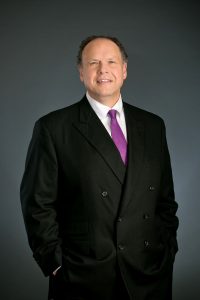 ABOUT THE AUTHOR: H. Michael Steinberg – Email the Author at: hmsteinberg@hotmail.com
A Denver, Colorado Criminal Defense Lawyer – or call his office at 303-627-7777 during business hours – or call his cell if you cannot wait and need his immediate assistance – please call 720-220-2277.
“A good criminal defense lawyer is someone who devotes themselves to their client’s case from beginning to end, always realizing that this case is the most important thing in that client’s life.”
Putting more than 40 years of Colorado criminal defense experience to work for you.
You should be careful to make a responsible choice when selecting a Colorado criminal defense lawyer. We encourage you to “vet” our firm. Over the last 40 years – by focusing ONLY on Colorado criminal law – H. Michael has had the necessary time to commit to the task of constantly updating himself on nearly every area of criminal law, including Colorado criminal law and procedure and trial and courtroom practice.
H. Michael works hard to get his clients the best possible results in and out of the courtroom. He has written, and continues to write, extensively on Colorado criminal law, and he hopes this article helps you in some small way.