 Colorado Criminal Lawyer Blog
Colorado Criminal Law – Possession Is Not Abuse: Rethinking Child Pornography Sentencing


COLORADO CRIMINAL DEFENSE INSIGHT
Looking Is Not Touching: Why a Leading Law Professor Says Child Pornography Possession Must Be Separated From Child Sexual Abuse — and What That Means in Colorado
By H. Michael Steinberg, Colorado Criminal Defense Lawyer — Law Office of H. Michael Steinberg
Picture two men sentenced in the same state. One sexually abused a child. The other downloaded pictures of a child being abused — pictures someone else made, of a child he never met.
Which man should serve more time?
Most people answer instantly: the man who abused a child. Yet across the United States, the law has sometimes produced the opposite result. In Arizona, a former teacher named Morton Berger received 200 years in prison for possessing 20 images. The same state’s courts gave far shorter sentences to men who molested children with their own hands — including, according to the defense briefing in his case, a 22-month sentence for a priest who molested an altar boy.
That gap is the subject of an influential law review article by Professor Carissa Byrne Hessick, Disentangling Child Pornography from Child Sex Abuse, published in the Washington University Law Review. This post translates her 50-page academic argument into plain English, checks it against what has happened in the years since, and explains what it means for anyone facing a sexual exploitation of a child charge in Colorado today.
A Word About Terms — and About What This Article Does NOT Say
Courts and statutes still use the phrase “child pornography.” Many advocates now prefer “child sexual abuse material” (CSAM), and Colorado’s statute calls it “sexually exploitative material.” We use the legal terms because they are what appear in the charging documents.
Nothing in Professor Hessick’s article — or in this post — suggests that possessing this material is harmless or should be legal. She states plainly that possession is a serious offense deserving significant punishment.
Her point is narrower and more important: the punishment should fit the crime actually committed and actually proven.
The Big Idea in One Paragraph
Hessick argues that lawmakers have steadily blurred the line between two different crimes: looking at images of abuse (possession) and committing abuse (what the law calls a “contact offense”). That blurring has driven possession sentences so high that they sometimes exceed sentences for hands-on abuse. She says the reasons offered for this are weak, the science behind them is thin, and — perhaps most surprising — the blurring may actually make children less safe.
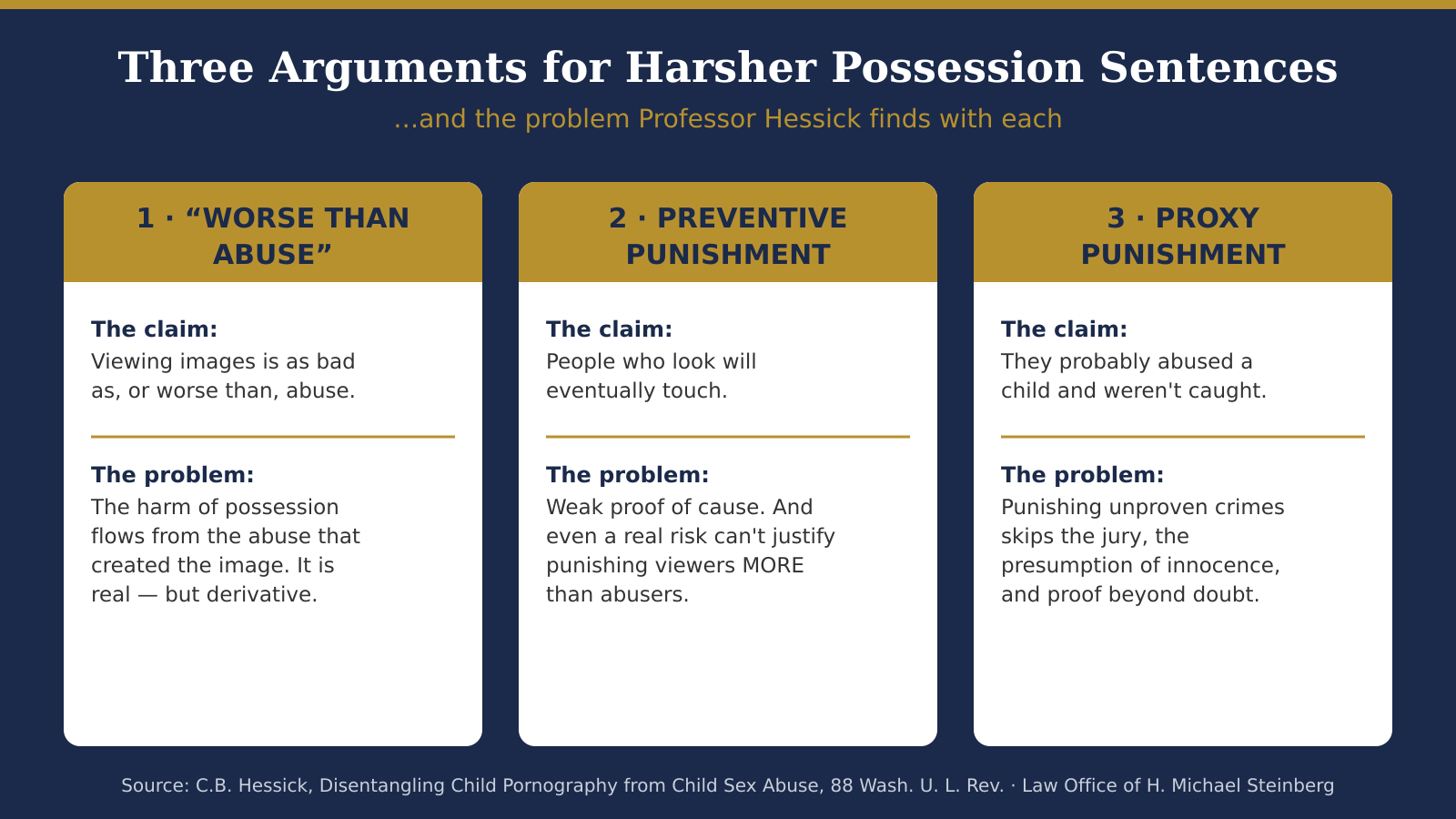
Figure 1. The three arguments Hessick identifies — and the core flaw in each.
How Sentences Got So High
By the late 1980s, aggressive enforcement had nearly wiped out the mail-order trade in this material. Then the internet arrived, and availability exploded. Legislatures responded — and kept responding.
- Federal law: In 1990 the maximum for possession was 10 years. By 2003 Congress had added a five-year mandatory minimum and a 20-year maximum for “receiving” images under 18 U.S.C. § 2252. Because you generally must receive a file from the internet to possess it, Hessick notes, nearly every downloader faces the harsher receipt penalty.
- The states: At the time she wrote, all 50 states criminalized possession and 30 had increased their penalties — most of them after 2000.
- Colorado: In 2006 the legislature reclassified possession from a misdemeanor to a felony under C.R.S. § 18-6-403. (Colorado has toughened the law again since — more on that below.)
Hessick found that much of the severity did not come from any deliberate choice to punish viewers more than abusers. It came from enhancements piling on top of each other — extra time for the number of images, extra time for using a computer, and statutes that lump possession together with production or distribution.
“A collection of 5,000 images may say more about the speed of someone’s internet connection than about how dangerous that person is.”
That idea, which Hessick draws from criminologists Ian O’Donnell and Claire Milner, matters enormously. Before the internet, a large collection meant years of effort. Today, one click on a file-sharing program can pull in thousands of files — and the law may count each one.
The Three Arguments for Harsher Sentences — and Why Hessick Rejects Them
Argument 1: “Possession is just as bad as abuse — or worse.”
Some officials and advocates have said that viewing these images is itself child abuse, or even worse than abuse. The U.S. Supreme Court, in New York v. Ferber (1982), quoted a commentator who said such material poses a greater threat to the child than the abuse itself.
Hessick responds with a simple thought experiment: if you had to choose between being sexually assaulted or having a fake explicit image of yourself circulated, which would you pick? Almost no one would choose the assault. The real harm of possession, she explains, flows from the abuse that created the image. The Supreme Court allowed states to ban private possession in Osborne v. Ohio (1990) precisely because possession feeds the market that produces abuse — which makes the harm of simple possession real, but derivative of the abuse.
She adds a troubling twist. Abusers keep children silent by convincing them that if anyone finds out, something terrible will happen. Telling the world that being seen is worse than being abused echoes the very message abusers use to maintain secrecy.
Argument 2: “People who look will eventually touch.” (Preventive punishment)
This is the argument Hessick takes most seriously. The law often punishes risky conduct to prevent harm — drunk driving is illegal because it leads to crashes, and felons can’t own guns because of what they might do with them.
But preventive punishment, she says, needs evidence: proof that viewers are actually likely to go on to abuse, and proof that longer sentences actually reduce abuse. When she wrote, that evidence was thin. Many studies only showed that convicted abusers had also looked at pornography — a correlation, not proof of cause. Some researchers found little demonstrable risk of future molestation among possession-only offenders.
And even if a link were proven, she argues, it would never justify punishing the viewer more than the abuser. That would be like punishing drunk driving more harshly than vehicular homicide — and it creates a perverse incentive, since a rational offender would gain nothing by choosing the lesser crime.
Argument 3: “They’ve probably abused a child and just haven’t been caught.” (Proxy punishment)
Child sexual abuse is hard to detect and hard to prove. Possession cases are comparatively easy: seize the computer and the evidence is there. So some officials, Hessick shows, have treated possession as a stand-in — a proxy — for abuse they assume happened but cannot prove.
This, she says, is the hardest argument to defend. It is the logic of “we didn’t catch you, but we know you probably did it.” It skips the jury trial, the presumption of innocence, and proof beyond a reasonable doubt — the bedrock of American criminal justice. She compares it to imprisoning every young man in a neighborhood because statistics say most have committed a violent crime. Nobody would accept that anywhere else.
Due Process in Plain English
In America, the government must prove each crime it wants to punish, to a jury, beyond a reasonable doubt. A sentence for possession that quietly includes extra years for abuse no one proved is, in Hessick’s words, a way of turning due process “on its head.”
The Hidden Cost: Blurring the Line May Hurt Children
The most original part of Hessick’s article argues that treating possession as if it were abuse has two side effects that undermine child protection.
First, it feeds the “stranger danger” myth. The faceless man downloading images on a computer fits our fear of strangers. But the research she cites shows strangers account for only about 7% of child sexual abuse cases. Most abusers are family members, family friends, or other trusted adults. A parent who watches the playground closely but never asks why a child doesn’t want to visit a certain relative has guarded against the wrong risk.
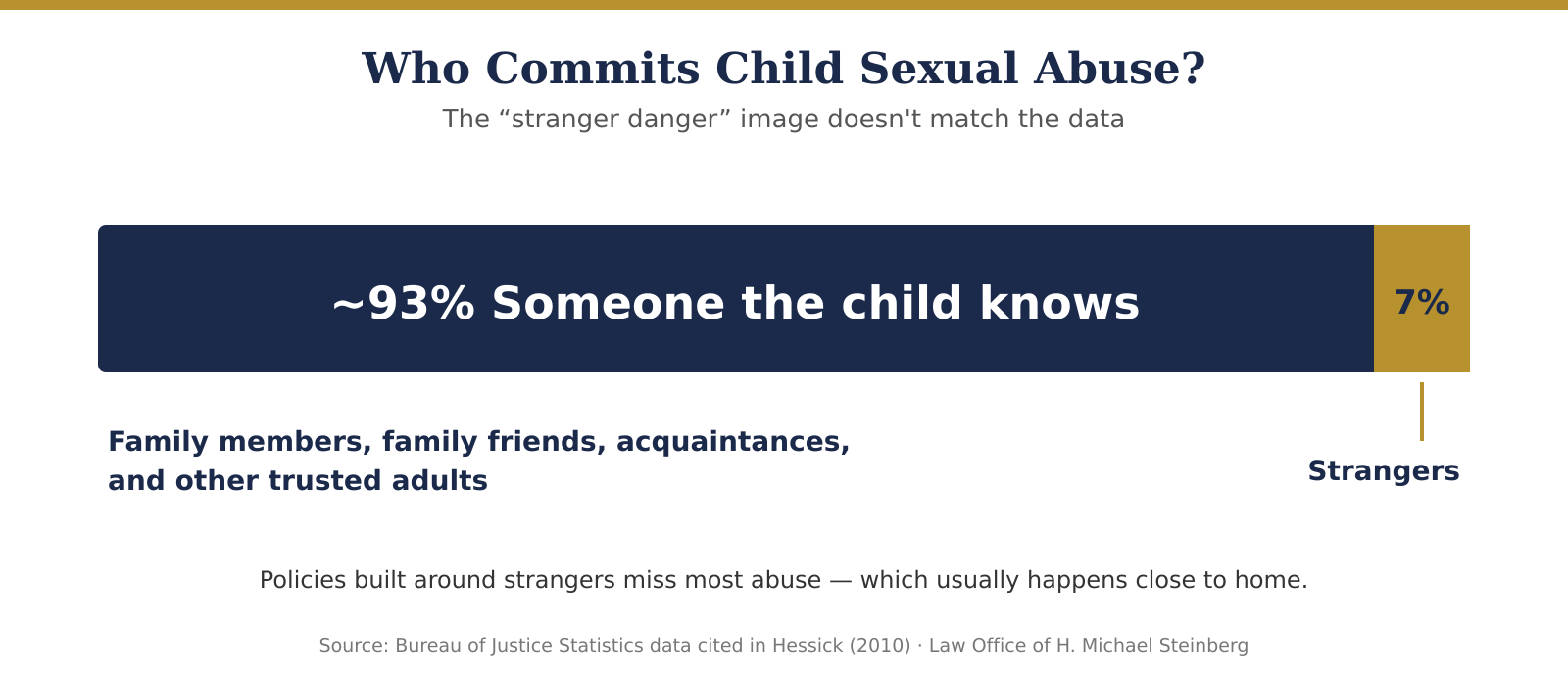 Figure 2. Who commits child sexual abuse, based on federal data cited by Hessick.
Second, it can make enforcement statistics misleading. When agencies announce arrests for “child sexual exploitation,” that label lumps possession cases together with hands-on abuse.
The public may assume abusers are being caught when, in reality, the easier-to-prove possession cases are driving the numbers. If people believe the problem is under control, there is less pressure to invest in the harder, unglamorous work — school and social-worker coordination, safe child care, and prosecuting abuse within families.
What Hessick Proposed
Her reforms are modest by design. She does not ask for possession to be treated lightly. She asks, at minimum, that no one convicted of possession end up serving more time than someone convicted of abusing a child.
Her suggestions:
- Separate possession from production. Making the material requires abusing a child; possessing it does not. Statutes should not punish them the same.
- Update outdated categories. On the internet, downloading is “receipt,” and file-sharing software can “distribute” files automatically. The old lines between possess, receive, and distribute no longer track blame.
- Re-examine computer enhancements. Nearly every case today involves a computer, so an enhancement for “use of a computer” no longer separates the worse cases from the rest.
- Cap image-count stacking. Set absolute limits so that the number of files cannot multiply a sentence into decades.
- Pair any reductions with strong supervision. Close monitoring can catch the minority who do pose a risk to children.
- Let judges use their judgment. After Gall v. United States and Kimbrough v. United States, federal judges may sentence below the guidelines when the guidelines produce an unjust result.
What Has Happened Since She Wrote
Hessick’s article dates to 2010. Here is how the debate has evolved:
The U.S. Sentencing Commission largely agreed with her about the federal guidelines. In its 2012 Report to Congress and its 2021 follow-up report, the Commission found that the federal guideline for possession and receipt cases, USSG § 2G2.2, no longer distinguishes clearly between more and less culpable offenders.
In fiscal year 2019:
- Enhancements for using a computer and for images of victims under 12 applied in over 95% of cases; the 600-or-more-images enhancement applied in 77.2%.
- Only 30% of offenders were sentenced within the guideline range; 59% received a sentence below it.
- Offenders with essentially identical guideline calculations received sentences ranging from probation to 19 years.
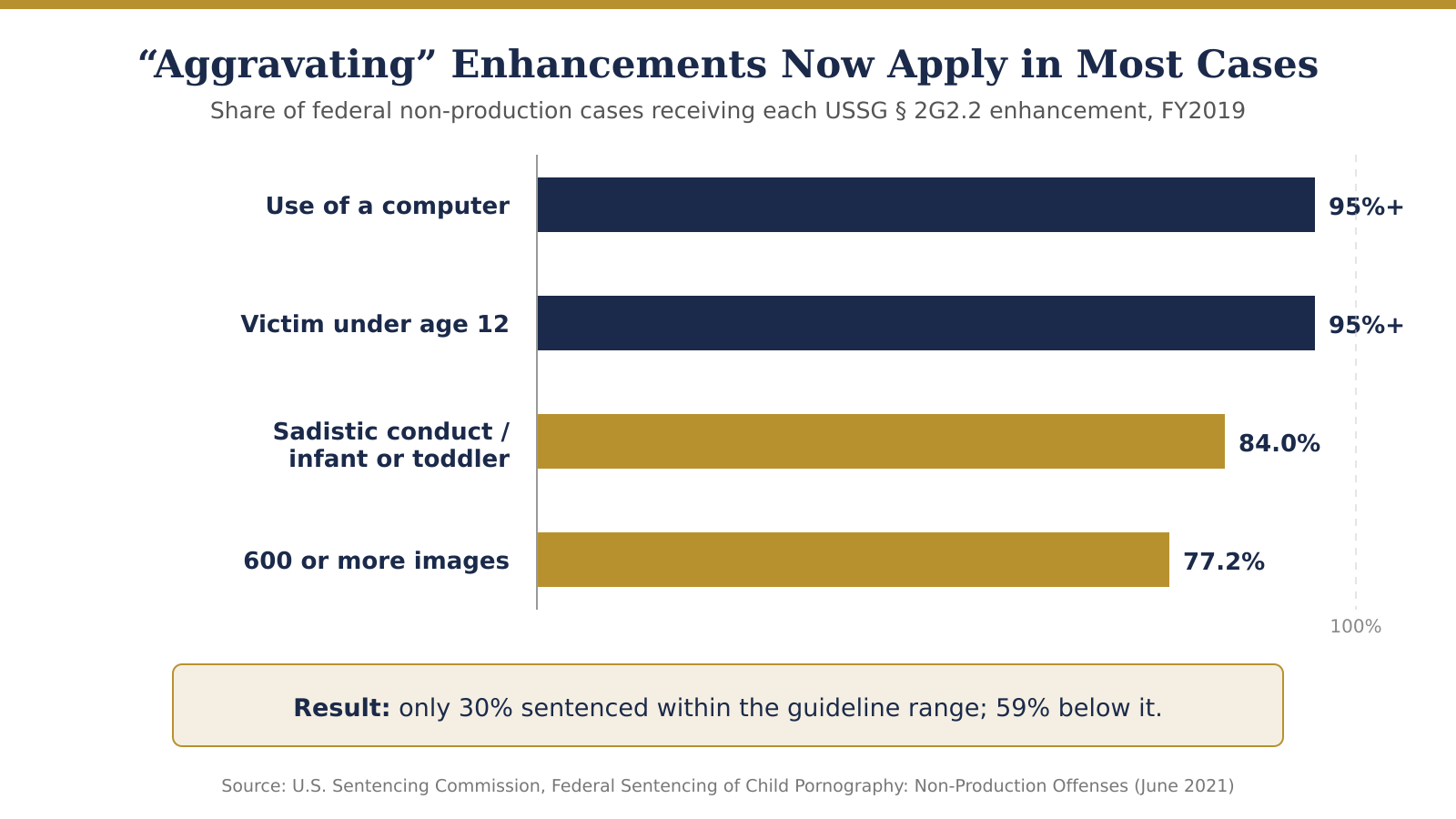 Figure 3. Federal enhancements that now apply in most non-production cases (U.S. Sentencing Commission, FY2019 data).
The research picture is more complicated than either side likes to admit. A widely cited 2011 meta-analysis by Michael Seto and colleagues found that about 1 in 8 online offenders had an officially known contact offense — but about half admitted one in studies relying on self-reports. Over follow-up periods of roughly 1.5 to 6 years, about 2% committed a new contact sexual offense.
The Sentencing Commission’s 2021 report likewise found 4.3% of released federal offenders were rearrested for a sex offense within three years, while noting arrest data undercounts actual offending.
Honest advocacy acknowledges both points: most possession-only offenders do not go on to commit contact offenses, and some offenders have undetected histories. That is exactly why Hessick says each case must be judged on proof, not assumptions.
The Supreme Court has also recognized the ongoing harm to victims. In Paroline v. United States (2014), the Court held that people who possess images of a victim can be ordered to pay restitution for their share of that victim’s losses — a reminder that the harm to the children depicted is real and continuing.
Colorado Went In the Other Direction
Hessick warned specifically about counting each image as a separate crime. Colorado has moved toward exactly that approach.
In 2020, in People v. Bott, 2020 CO 86, the Colorado Supreme Court held that prosecutors could not split one collection into batches of 20 images to charge multiple felonies; simultaneous possession of more than 20 items was a single offense.
The legislature answered in 2021 with House Bill 21-1069. Under the current version of C.R.S. § 18-6-403:
- Accessing with intent to view, viewing, possessing, or controlling sexually exploitative material is a class 5 felony for each item.
- It becomes a class 4 felony if the item is a video or other moving images, or if it is a second or subsequent offense.
- It is an “extraordinary risk” crime — raising the maximum presumptive sentence under C.R.S. § 18-1.3-401 — when the material depicts a child under 12, the use of force or violence, or sexual intercourse, intrusion, or sadomasochism.
- Production and distribution remain class 3 felonies.
- As of August 6, 2025, the definition also reaches realistic computer-generated or altered images that depict an identifiable child.
- A conviction triggers sex offender registration under C.R.S. § 16-22-103, sex-offense-specific evaluation and treatment, and lasting collateral consequences.
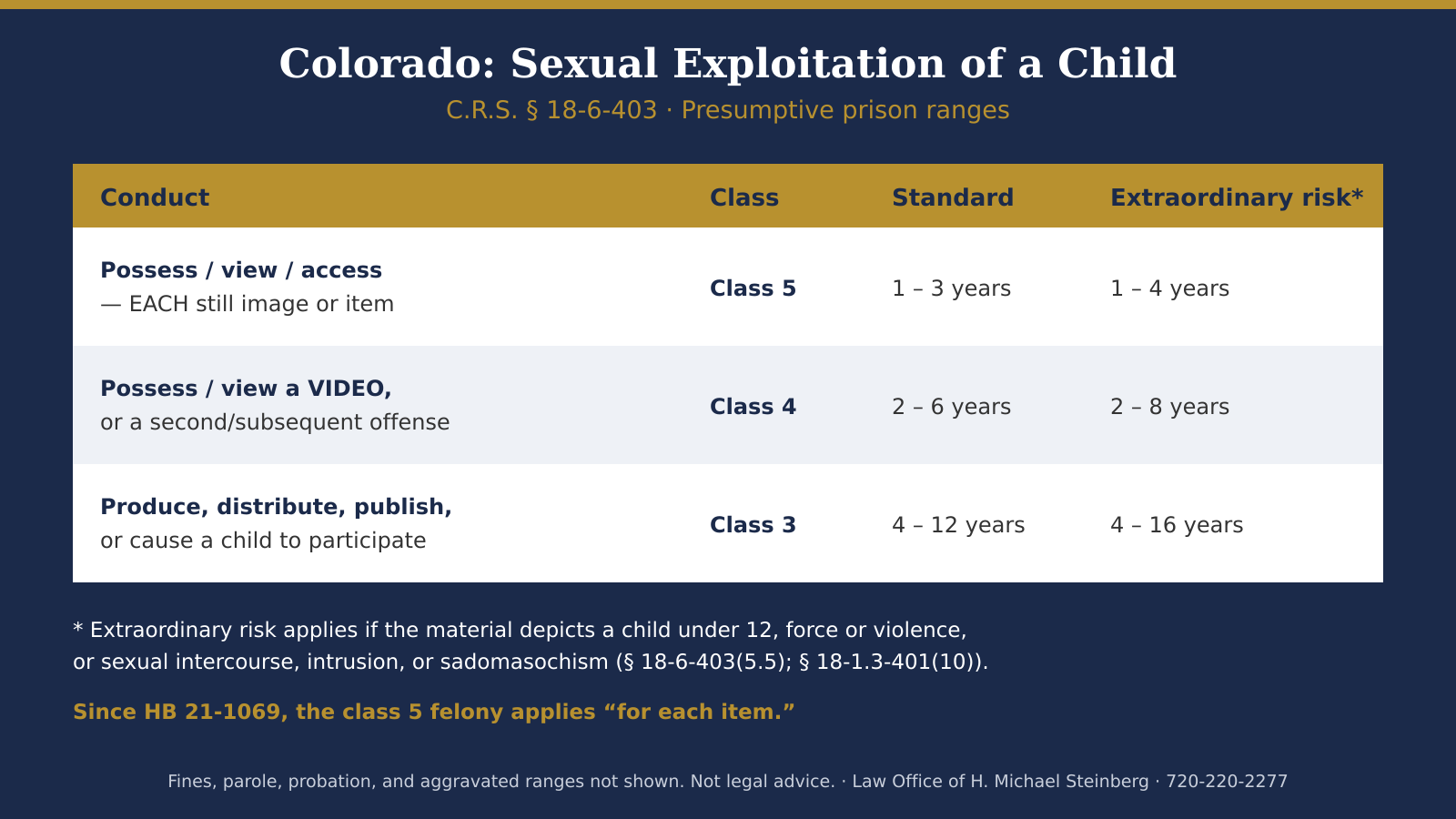
Figure 4. Colorado presumptive prison ranges under C.R.S. § 18-6-403 and § 18-1.3-401.
“Notice the label: “extraordinary risk.” That is the preventive-punishment theory Hessick questioned — written directly into Colorado law.”
Colorado judges, unlike Arizona’s in the Berger case, generally retain discretion over whether multiple sentences run concurrently or consecutively. But with each file now a potential felony count, the theoretical exposure in a case involving hundreds of files is staggering — which gives prosecutors enormous leverage in plea negotiations.
What This Means If You Are Under Investigation or Charged in Colorado
Hessick’s article is not just academic theory. Its insights translate into real defense work:
- Knowledge and intent are elements. File-sharing programs download and share automatically; thumbnails and cache files are created without user action; devices are shared. The prosecution must prove you knowingly possessed or accessed the material with intent to view it. Independent forensic review is often essential.
- Count-stacking can be challenged. How items are counted, which statute version applies to the date of the offense, and whether charges are multiplicitous under double jeopardy principles … all matter.
- Assumptions are not evidence. If the prosecution suggests — directly or through “risk” rhetoric — that you must have harmed a child, that claim must be proven, not presumed. Hessick’s proxy-punishment critique is a useful framework at sentencing.
- Individualized evaluation matters. Credible psycho-sexual evaluations, treatment engagement, and the research on recidivism can help a judge see the actual person rather than a stereotype.
- Don’t talk to investigators without a lawyer. Many of these cases begin with a knock on the door and a “friendly” conversation with agents. Statements made in those moments frequently become the core of the prosecution’s case.
Frequently Asked Questions
Q: Is possessing child pornography a felony in Colorado?
A: Yes. Under C.R.S. § 18-6-403, it is a class 5 felony for each item, and a class 4 felony for videos or repeat offenses. Higher ranges apply when the material is classified as an extraordinary risk crime.
Q: Can I be charged separately for every image?
A: Since House Bill 21-1069 took effect in 2021, the statute imposes a class 5 felony “for each item.” The exact charging and sentencing exposure depends on the facts, the date of the alleged offense, and how the counts are structured — issues an experienced defense lawyer should review closely.
Q: Does the law assume someone who views these images has abused a child?
A: Legally, no — every contact offense must be separately charged and proven beyond a reasonable doubt. But as Professor Hessick documents, that assumption often shapes how these cases are discussed and sentenced. Pushing back on it is a key part of the defense.
Q: Will I have to register as a sex offender?
A: A conviction for sexual exploitation of a child generally requires registration in Colorado, along with sex-offense-specific evaluation and treatment. Registration rules are complex and fact-specific.
The Bottom Line
Professor Hessick’s message is not that possession should be punished lightly. It is that a fair system punishes people for what they did and what the government can prove — not for what someone fears they might do or assumes they once did. Equating looking with touching may feel protective, but it can produce unjust sentences, distort public understanding of where children are really at risk, and pull attention away from the harder work of stopping abuse where it most often happens: close to home.
If you or someone you care about is under investigation or has been charged with sexual exploitation of a child in Colorado, the stakes could not be higher. Call the Law Office of H. Michael Steinberg at 720-220-2277 for a confidential consultation. With more than forty years defending Coloradans in Denver and across the Front Range, we know how to challenge the evidence, the counting, and the assumptions.
Related reading on the Colorado Criminal Lawyer Blog and at hmichaelsteinberg.com.
Sources and Authorities
- Carissa Byrne Hessick, Disentangling Child Pornography from Child Sex Abuse, 88 Wash. U. L. Rev. (2011) (SSRN draft dated March 24, 2010).
- C.R.S. § 18-6-403 (sexual exploitation of a child); C.R.S. § 18-1.3-401 (felony sentencing); C.R.S. § 16-22-103 (registration).
- People v. Bott, 2020 CO 86; Colorado HB 21-1069.
- 18 U.S.C. § 2252; New York v. Ferber, 458 U.S. 747 (1982); Osborne v. Ohio, 495 U.S. 103 (1990); Ashcroft v. Free Speech Coalition, 535 U.S. 234 (2002); Gall v. United States, 552 U.S. 38 (2007); Kimbrough v. United States, 552 U.S. 85 (2007); Paroline v. United States, 572 U.S. 434 (2014).
- State v. Berger, 212 Ariz. 473, 134 P.3d 378 (2006).
- U.S. Sentencing Commission, 2012 Report to the Congress: Federal Child Pornography Offenses; Federal Sentencing of Child Pornography: Non-Production Offenses (2021).
- Seto, Hanson & Babchishin, Contact Sexual Offending by Men With Online Sexual Offenses, 23 Sexual Abuse 124 (2011).
DISCLAIMER
This article is for general informational purposes only and does not constitute legal advice. Reading it does not create an attorney-client relationship. Laws change, and the outcome of any case depends on its specific facts. If you are facing a criminal charge, consult a qualified Colorado criminal defense attorney about your situation.
Law Office of H. Michael Steinberg · Denver, Colorado · 720-220-2277 · www.hmichaelsteinberg.com