mt:Include module="Global Settings" /> Juvenile Law and Sentencing Archives: Colorado Criminal Lawyer Blog

Recently in Juvenile Law and Sentencing Category

January 19, 2012

Colorado State Legislature and School Districts Attempt A More Rationale Approach To Colorado Juvenile Criminal Law and School Discipline in a Post Columbine World


A recent article in the Denver Post finally addresses the most recent attempts by Colorado Schools - hopefully to be followed by the Colorado State legislature - to reverse years of Zero-Tolerance policies in Colorado's Public Schools and in the Courts.

Last year in December - another excellent article in the Denver Post quoted a Magistrate Kent Spangler, a Fort Collins Judge, who had this to say:

"Kids won't gain a respect for the law, for their parents, for teachers, for rules in general if they're told 'You're wrong! You messed up!' and don't take the time to get at the root of the problem,"

As an experiencd former Colorado Front Range Career Prosecutor -DA and now a Colorado Crimiinal Defense Lawyer - I am always impressed by judges who take the time to "teach" individuals before them about the law and the impact of their acts on their families, the victims, or society. Judge McGahey in Denver, Judge Ollada and Benze in Arapahoe County, and the list goes on and on.

Colorado has some of the best and most caring judges in the nation in my opinion.

Zero Tolerance policies - enacted after the so called Summer of Violence in the 1980's and following the Columbine Case - were and continue to be mindless - knee jerk reactions to complex problems. Juveniles have little life experience to fully understand the nature of their actions and the laws need to address those more difficult underlying issues.

The vast majority of crimes committed by juveniles ultimatley involve alcohol and low level drug offenses- - both of which are typically minor offenses in the criminal justice system.

The exposure of these kids in the juvenile justice system will have the kind of impact that is difficult to measure.

"These kids aren't monsters. They're kids! Sure they've gotten a little off track but you can't write them off. You have to show them what they're worth- appeal to their intellect- and when they start to believe they can do better, they will," said Spangle

In an article by Kevin Simpson - Kevin highlights the debate - "that the well-intentioned pendulum swing toward zero tolerance (after Columbine) resulted in a loss of perspective -- something he saw illustrated in his jurisdiction by the 2009 suspension of a Cherry Creek School District student for bringing non-functioning, drill-team rifles to school in her car."

H. Michael's Take

The task force addressing a revamping of Colorado's Juvenile Code - needs our support - to take a more rational view of the Colorado Juvenile Justice System - New statewide legislation - taking a reasoned approach to the complex issues behind juvenile crime - is what we need today.

Hurrah for the pendulum swing - let's hope it continues it's swing away from the Post-Columbine zero tolerance approach. Sen. Linda Newell, D-Littleton, who has introduced Senate Bill 46, regarding the revamp of school dicipline laws - is on the right track.

August 13, 2011

Colorado State Jefferson County District Attorney Scott Storey Takes A Reasoned Approach to the Crime of Sexting


In a recent press release on the 1st Judicial District Website in Colorado - Scott Storey - the elected DA - approaches the increasing problem of Sexting with a reasoned eye - recognizing that which most experts in the field understand - it is a matter of "growing up" and "coming of age" .. that leads to an understanding of the proper boundaries between the genders. It is not a sex offender crime in most cases.

In the following reprinted web page - DA Storey explains his reasoning.

He is to be commended for his common sense and not knee jerk response - as is often the case in this area.

Sexting Balancing the Law, Teens and Technology

The District Attorney's Office has developed a new approach to "Sexting." This precarious pastime, a growing phenomenon with young people, is sending sexually explicit photos and video of themselves over the Internet. The combination of teenagers' age-old sexual curiosity, bad judgment and their love of modern electronic data sharing can have devastating consequences.

In March 2009, a Cincinnati teen committed suicide after sexually explicit photos she sent to her boyfriend were emailed to others after they broke up. The teen was humiliated and harassed at school. She was miserable and became afraid to even go to school. In desperation, she took her own life.

"It is critical for parents to know what "Sexting" is and just how pervasive it is," says District Attorney Scott Storey. "We all have to work together as a community to stop this dangerous behavior."

One in five teens admits to taking nude or semi-nude photos of themselves and sending them to someone or posting them online. None of these teens ever consider the possible repercussions. Those photos are not retrievable from cyberspace. They never think that the trusted friend or boyfriend to whom the explicit photos were sent or their "friends" on their social networking site would ever pass them on.

Teens also never consider the fact that Sexting is illegal if the photographed person is under 18 years of age. It is illegal to possess the naked pictures, and an even more serious offense, to send them or post them online.

The District Attorney's Office has tools and tips for parents on their website hoping to prevent Sexting.

The DA in Jefferson and Gilpin Counties has developed a protocol to use in some of these cases as they are presented by law enforcement. "Often the conduct is more of a boundary problem than a sex offense, but we have to be the ones to make that determination," says Storey.

"We developed a special curriculum to address teenage boundary issues without charging the teen with a sex offense. But make no mistake, having naked pictures of any teen under 18 on your cell phone or MySpace page is a crime which can result in serious consequences including sex offender registration."

We strongly encourage parents to interact with their kids and their online activities. Supervising your kids in cyberspace is not snooping or invading their privacy, its just good parenting.

August 13, 2011

Colorado Juvenile Sex Crimes - The Newest Wrinkle in the Area of "Sexting" - "Sextortion"

Colorado Juvenile Sex Crimes - The Newest Wrinkle in the Area of "Sexting" - "Sextortion"

Colorado District Attorney for the 18th Judicial District (Jefferson County) addresses the new crime of Sextortion.

Sextortion is an Enhancement of a raging phenomenon in Colorado known as Sexting - Sexting is sending sexually explicit photos and video of themselves over the Internet.

Here is the Jefferson County ( Scott Storey's) District Attorney's read on Sextortion

"The latest in Internet and Cell Phone danger for teens.

Many teenagers take sexually explicit or even nude pictures of themselves and send them to others either online or through text messaging. This is called "Sexting". Sexting occurs more frequently than parents can imagine. These photos become "Sextortion" when they are used as a tool of exploitation or extortion.

Recently, a Colorado teenage girl made the mistake of sending her naked picture to a 20-year-old man in California. This teenage girl thought this young man liked her and she had feelings for him. She accepted him as a friend on Facebook site. After receiving the teenage girl's naked picture, the man threatened her, telling her that if she didn't send him $1,500 dollars or send him more naked pictures of herself, he would send her naked picture to all her friends on Facebook.

The teenage girl was faced with the possibility of her naked picture being distributed to all her friends and felt pressured to comply. The teenager finally told her mother, who then alerted law enforcement. This 20-year-old man was identified and prosecuted. He was sentenced to prison.

These "Sextortion" cases are very concerning to law enforcement as frightened victims might give in to demands such as posing for explicit photos, having sex with the perpetrator or sending them money."

H. Michael's Take

These cases will be prosecuted by the DA's in Colorado because of the immense impact on a teenager's life if these photographs are used to stalk and or extort teenagers. - The rub - let your kids know these kind of crimes - Sexting or - especially Sextortion - will be prosecuted.

August 24, 2010

How Young is Too Young? The Limits of The Juvenile Justice System


GALVESTON, TX (KTRK) -- A young man sentenced to life in prison when he was just 15 years old may now be getting a second chance.

After spending four years behind bars for capital murder, a now 19-year-old man could be getting a new trial thanks to a ruling from the court of appeals.

The news of this decision comes just five weeks after the lawyers argued the case. The appeal means rather than sit behind bars until he dies Litray Turner is getting a second chance.

In 2006, Turner was just 15 years old when a Galveston County jury convicted him of capital murder for his involvement in the shooting death of Phuong Lam, a Dickinson convenience store owner. While Turner didn't pull the trigger, he was automatically sentenced to life without parole.

"Life without parole doesn't mean you're gonna get paroled in 50 years, doesn't mean that. It means he dies in prison," said attorney Eric Davis. "Why this case went to trial and why Litrey ended up getting a life sentence instead of some type of plea deal, I couldn't figure it out."

According to the appeals court's opinion, there was evidence to show turner was only guilty of robbery and not capital murder. The gunman in the case, identified as Andrew "young money" Brown, was sentenced to 40 years in prison, eligible for parole in 20 years; a disparity Davis was determined to fight.

"The criminal justice system just works that way, unfortunately," he said. "Often times, if you don't have enough resources, you're not able to bring much to the table."

It's highly unlikely, perhaps even impossible, for Turner to be sentenced to life in prison again. That's because last September, Texas repealed its life without parole law, making it unconstitutional to sentence juveniles to life sentences, without an opportunity for parole.

"Fifteen-year-olds are not adults. Neither are 16 or 17-year-olds," said Davis. "And for the people out there that hear me and say that's typical defense lawyer nonsense, God forbid it should happen to your son or your daughter."

Criminal defense attorney Brian Wice hopes Turner's case will help 19 other Texas teenagers currently serving out life sentences without parole, even though the law no longer exists.

"The court of criminal appeals will have to determine whether or not it's cruel and unusual punishment for juveniles to serve a sentence the legislature's now considered inappropriate," said Wice.

Brenda Turner, who says her life has been empty since her son was incarcerated, just wants the chance to take care of her basketball star at home again.

"He was taken from me when he was just 15," she told us. "I should be still taking care of him, stocking up on his favorite food, cereal and milk."

Litray still doesn't know the news. His family hopes he'll call so they can tell him directly.

H. Michael's Take

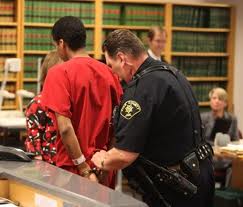
The whole idea behind the juvenile justice system is the recognition that kids are not adults -- their inds do not work like ours and their decisions are not based on the same life experience as adults. In short, they are different.

The juvenile criminal justice system operates according to the premise that youth are fundamentally different than adults, both in terms of level of responsibility and potential for rehabilitation. The treatment and successful reintegration of youth into society are the primary goals of the juvenile justice system, along with overall public safety.

The juvenile criminal justice system operates according to the premise that youth are fundamentally different than adults, both in terms of level of responsibility and potential for rehabilitation. The treatment and successful reintegration of youth into society are the primary goals of the juvenile justice system, along with overall public safety.

"Get Tough on Crime" Legislation

A steep rise in juvenile crime occurred between the late 1980s and mid-1990s. In response to a fear that juvenile crime would continue to rise at the rate seen between (roughly) 1987 and 1994, legislatures enacted measures designed to "get tough on crime."

This anti-crime sentiment of the period caused changes to be implemented to the juvenile justice system that made it increasingly similar to the adult (criminal) justice system. The shift was predictable. Instead of viewing youth as in need of rehabilitation, they were - and are now in many cases, viewed more as young criminals. Rehabilitation became a lesser priority to public safety in the aggressive campaign against crime of the 1990s.

In the late 1990s Americans faced growing concern over highly publicized and violent juvenile crime. A series of school shootings and other horrendous offenses caused the public to fear a new breed of "juvenile superpredators.," defined as "juveniles for whom violence was a way of life - new delinquents unlike youth of past generations."

This case, I hope, represents a re-examination of the serious slide from sanity that has been representative of the last 20 years...