mt:Include module="Global Settings" /> DUI - Vehicular Assault Laws Archives: Colorado Criminal Lawyer Blog

Recently in DUI - Vehicular Assault Laws Category

September 4, 2011

2011 New Law Modifies and Expands Reach of Conditions of Mandatory Restraining Orders in Colorado Criminal Cases - 18-1-1001 CRS


A New Law Signed by the Colorado Governor in June of this year -- mandates certain conditions of bond be expanded to cover a number of new crimes. Previously, these conditions of bond were applied primarily in Colorado Domestic Violation Cases -- the New Law expands the use of these conditions to the crimes listed below.. It is worth noting the importance of this new law as greatly increasing the costs of and difficulty in complying with a pending - UNPROVEN - Colorado criminal case.

Here is a Summary of the new Law / Legislation

The bill expands to all crimes subject to the Victims' Rights Act the courts' discretion to add
the following restrictions, currently only available in domestic violence cases, to mandatory
protection orders issued to defendants at the time of arraignment or first court appearance:

• to stay away from the victim's home and other locations where the victim may be found;
• to not have contact or direct or indirect communication with the victim;
• to not possess or control firearms or other weapons;
• to not possess or consume alcohol or controlled substances; and
• other orders deemed appropriate to protect the victim's safety.

Under current law, a mandatory protection order is issued by the court in a criminal
proceeding. The order restrains a person from harassing, molesting, intimidating, retaliating against, or tampering with the defendant or any witness to the acts charged. The order stays in effect until the defendant is acquitted or until the defendant is convicted and completes his or her sentence.

Under existing law, a court may issue a protective order in domestic violence cases that restrict the defendant from being present at particular locations or contacting the victim. House Bill 11-1267 expands this to sexual assaults and other crimes that are subject to the Victims' Rights Act.


Crimes Covered by the Colorado Victims' Rights Act

Murder in the 1st and 2nddegree
Sexual assault by one in a position of trust
Careless driving
Manslaughter
Sexual assault on a client by a psychotherapist
Stalking
Criminally negligent homicide
Robbery
Failure to stop at the scene of an accident
Vehicular homicide
Aggravated robbery
Any criminal attempt, any conspiracy, any criminal solicitation, and any accessory to crime
Assault in the 1st, 2nd, and 3rd degree
Aggravated robbery of controlled substances
Retaliation against a witness or victim
Vehicular assault
Incest
Intimidation of a witness or victim
Menacing
Aggravated incest
Aggravated intimidation of a witness or victim
Kidnaping in the 1st and 2nd degree
Child abuse Tampering with a witness or victim
Sexual assault
Sexual exploitation of children
Indecent exposure
Sexual assault in the 1st, 2nd, and 3rd degree
Crimes against at-risk adults or at-risk juveniles
Violation of a protection order against a person charged with certain sex crimes (4 classes)
Unlawful sexual contact Domestic violence (3 classes)
Sexual assault on a child
Bias-motivated crimes

A violation of a mandatory protection order of the type covered by the bill is a class 1
misdemeanor, the fine for which ranges from $500 to $5,000.

Although the court already exercises broad authority when ordering defendants to refrain from certain activities, expanding the restrictions that can be added to include all victims' rights crimes will increase the number of mandatory protective orders issued.


18-1-1001. Protection order against defendant.

(The changes TO THE SECTION - 3 -are CAPITALIZED)

(3) Nothing in this section shall preclude the defendant from applying to the court at any
time for modification or dismissal of the protection order issued pursuant to this section or the district attorney from applying to the court at any time for further orders, additional provisions under the protection order, or modification or dismissal of the same.

The trial court shall retain jurisdiction to enforce, modify, or dismiss the protection order until final disposition of the action. Upon motion of the district attorney or on the court's OWN motion to protect FOR THE PROTECTION OF the alleged victim OR WITNESS, the court may, in cases involving domestic violence as defined in section 18-6-800.3 (1) AND CASES INVOLVING CRIMES LISTED IN SECTION 24-4.1-302, C.R.S., EXCEPT THOSE LISTED IN PARAGRAPHS (cc.5) AND (cc.6) OF SUBSECTION (1) OF THAT SECTION, enter any of the following further orders against the defendant:

(a) An order to vacate or stay away from the home of the ALLEGED victim OR WITNESS and to stay away from any other location where the victim OR WITNESS is likely to be found;

(b) An order to refrain from contact or direct or indirect communication with the ALLEGED victim OR WITNESS;

(e) Any other order the court deems appropriate to protect the safety of the alleged victim OR WITNESS

June 16, 2011

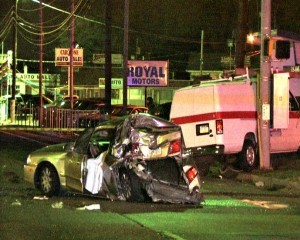
Colorado Hit and Run Laws Providing Incentive to Flee the Scene - May Change

A Recent Denver Post article points out an anomaly in the law

" End incentive for fleeing scene of a bad accident"

The scenario is this. Intoxicated driver gets into an accident. Realizes that if he or she stays at the scene and calls the police as the law requires - they will be charged with DUI.

They make the decision to leave the scene

This is the rub. Without reaching the moral aspect of this decision - the police are put in a very difficult position as the evidence of what occurred most often leaves with the suspect.

The article in the post lists several incidents involving injuries in hit and run accidents.

"
A 31-year-old man was arrested in Pueblo after fleeing the scene of an accident that injured three people. Police suspect he was driving under the influence of alcohol. And a 10-year-old in west Denver miraculously escaped injury this month when he was hit by a car that was speeding down South Irving Street. The driver never stopped. Those are just a few of the most recent high-profile hit and runs."
At present -- the Colorado law can charge the individual - if they can identify that person as the driver of the suspect car - with what is commonly referred to as "Hit and Run."

It is true. A "hitch" in the laws "actually creates an incentive to flee an accident if the driver is drunk"

If an idividual stays at the scene and there are injuries to the victims of the accident... the charge will be Vehicular Assault - a Class 4 felony.

Not only is that charge much more significant than the misdemeanor Hit and Run charge -(if that charge can be proven) - it is a crime that is identified under the law as a "strict liability" cirme - meaning that other than identifying the driver as intoxicated - there is no legal defense to the crime.


H. Michael's Take

Prosecutors often take a very hard line in these cases... seeking prison if they can prove their case. This "no prisoners" approach to prosecuting these cases in the already impossibly harsh political environment for DUI prosecutions has actually made fleeing the scene of a serious DUI accident a "logical alternative" to accepting responsibility for one's actions.

If the public perceived more compassion in these unintended accidents - the fear driven decision to leave the scene would no longer seem to be the "only way out."

To Read more: see the Editorial: End incentive for fleeing scene of a bad accident - The Denver Post http://www.denverpost.com/opinion/ci_18131397#ixzz1OmZC7c69