mt:Include module="Global Settings" /> Colorado DUI - Vehicular Homicide Archives: Colorado Criminal Lawyer Blog

Recently in Colorado DUI - Vehicular Homicide Category

December 26, 2011

Dismissed DUIs in Colorado Underscore Need to Investigate Lead Police Officer's Credibility


Recently in Mesa County Colorado on the Western slope of Colorado, the District Attorney's office was forced to dismiss eight criminal cases in light of credibility questions surrounding a former Colorado State Trooper.

Because of the impact of the lead officer's testimony in a DUI caae, the District Attorney's officer is reviewing hundreds more cases that are expected to be dropped in the coming weeks.

The tropper - Donald Moseman, stepped down from the State Troopers Office in December after a departmental investigation.

The cases that have been dismissed are all drunk driving misdemeanor cases that had Moseman as the sole witness for the prosecution but additional cases in additional areas are also subject to the same scrutin .

The result of this action has led to a demand by Colorado Defense Lawyers in the area to turn over the contents of Moseman's internal affairs investigation, and it is expected that a judge will compel the department to turn over those records so that the judge could perform a private review to determine if there was material in that file that is relevant to these cases

This kind of material is called Brady Material and is considered directly exculpatory or potentially exculpatory evidence therefore the District Attorney is required by Colorado Law to turn over material bearing on the credibility of their primary witness.

The Grand Junction Sentinel reproted that:

"A letter dated Dec. 5 that was sent to Hautzinger by State Patrol Major Barry Bratt said an internal investigation found Moseman "displayed bias" in cases involving drivers suspected of being impaired by drugs or alcohol. The letter said Moseman submitted reports that "were a combination of reports from prior arrests and the current arrest, resulting in reports which contained wrong or conflicting information." "

June 16, 2011

Colorado Hit and Run Laws Providing Incentive to Flee the Scene - May Change

A Recent Denver Post article points out an anomaly in the law

" End incentive for fleeing scene of a bad accident"

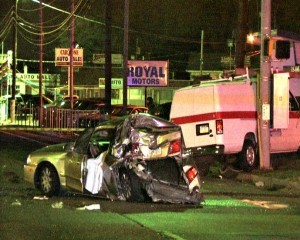
The scenario is this. Intoxicated driver gets into an accident. Realizes that if he or she stays at the scene and calls the police as the law requires - they will be charged with DUI.

They make the decision to leave the scene

This is the rub. Without reaching the moral aspect of this decision - the police are put in a very difficult position as the evidence of what occurred most often leaves with the suspect.

The article in the post lists several incidents involving injuries in hit and run accidents.

"
A 31-year-old man was arrested in Pueblo after fleeing the scene of an accident that injured three people. Police suspect he was driving under the influence of alcohol. And a 10-year-old in west Denver miraculously escaped injury this month when he was hit by a car that was speeding down South Irving Street. The driver never stopped. Those are just a few of the most recent high-profile hit and runs."
At present -- the Colorado law can charge the individual - if they can identify that person as the driver of the suspect car - with what is commonly referred to as "Hit and Run."

It is true. A "hitch" in the laws "actually creates an incentive to flee an accident if the driver is drunk"

If an idividual stays at the scene and there are injuries to the victims of the accident... the charge will be Vehicular Assault - a Class 4 felony.

Not only is that charge much more significant than the misdemeanor Hit and Run charge -(if that charge can be proven) - it is a crime that is identified under the law as a "strict liability" cirme - meaning that other than identifying the driver as intoxicated - there is no legal defense to the crime.


H. Michael's Take

Prosecutors often take a very hard line in these cases... seeking prison if they can prove their case. This "no prisoners" approach to prosecuting these cases in the already impossibly harsh political environment for DUI prosecutions has actually made fleeing the scene of a serious DUI accident a "logical alternative" to accepting responsibility for one's actions.

If the public perceived more compassion in these unintended accidents - the fear driven decision to leave the scene would no longer seem to be the "only way out."

To Read more: see the Editorial: End incentive for fleeing scene of a bad accident - The Denver Post http://www.denverpost.com/opinion/ci_18131397#ixzz1OmZC7c69

June 9, 2010

Colorado DUI Driver Gets 36 Years In the Deaths of Two - The High Cost of the Making The Wrong Decision

The Denver Post recently reported on a sentencing in a drunk driving death in Denver Colorado.

Sandra Jacobson, convicted on nine counts related to the Jan. 28, 2009 traffic deaths of two women taking a cab to Denver International Airport, today was sentenced to 36 years in prison.

Jacobson, whose BAC was estimated at more than three times the legal limit when her truck hit a cab causing the deaths of librarians Kate McClelland, 71, and Kathy Krasniewicz, 54, and injuring cabdriver Nejmudean Abdusalam, was convicted in April.

The District Attorney proved to a jury that a drunken Jacobson sped along at more than 80 mph, lost control of her pickup, swerved across two lanes, clipped the van and drove off.

Jacobson first told police that she'd downed cold medicine, and then insisted she was sober and driving the speed limit, momentarily lost control of her truck after her dog went for a Cheeto -- possibly because the unseen taxi crashed into her -- but never realized she'd made contact with another vehicle.

In Jacobson's version of events, she stopped a short time later at Denver International Airport to ship a puppy to her brother in Texas, then downed a "road pop" she'd inadvertently left in her truck days earlier. That road pop was a bottle of Vitamin Water laced with 99-proof banana schnapps. The Denver Post Online carrried the story.

At Sentencing the presideing judge - Judge McGahey -- handed down one of the stiffest sentences in Colorado history -Sandra Jacobson, convicted on nine counts related to the Jan. 28, 2009 traffic deaths of two women taking a cab to Denver International Airport was sentenced to 36 years in prison.

H. Michaels Take:

The issue in this case is the danger, in a climate of "hang 'em high" of taking a case like this to trial. The judge, at a suppression hearing to decide whether there was probable cause to arrest the Defendant after the accident, and noting that nearly 3 1/2 hours passed between the time police officers first contacted Jacobson and the time she was given a breath test, said that while several police officers testified they did not smell booze on her breath, there was "enough" probable cause to make the arrest and demand the blood/ or brath test.

This ruling reminds us of the extremely low standard for probable cause to arrest in Colorado.

Denver District Judge Shelia Rappaport concluded that despite the fact some officers didn't smell alcohol they observed that she was "nervous, fidgety and acting erratically."

"There was certainly probable cause, based on everything in front of the court," Rappaport said in a hearing this afternoon.

Clients that believe that a case will be dismissed because of an alleged violation of their constitutional rights - sometimes have a case worth pursuing - however, as this case demonstrates -- the risks are high - if - in this day of harsh scrutiny of judges in these cases, that the trial judge will give the defendant the benefit of the doubt..

The decision to pursue a trial or a plea bargain is a tough one and is a decision that should be carefully made with your Colorado Criminal Defense Lawyer..